

Huaneng Design Institute
Design consulting EPC general contracting project supervision and other whole process professional service institutions
Accelerate the construction of a national unified electricity market credit system, add a cumulative 1.5 million kilowatts of photovoltaic installed capacity during the 14th Five-Year Plan, and implement a number of integrated pilot projects for source-grid-load-storage.

The National Energy Administration has released the 'Implementation Opinions on Accelerating the Construction of a National Unified Electricity Market Credit System (Draft for Comments)'!
Regarding the solicitation of opinions on the 'Implementation Opinions on Accelerating the Construction of a National Unified Electricity Market Credit System (Draft for Comments)' from the National Energy Administration, it mentions strengthening the supervision of commitment fulfillment. Strengthen the supervision of credit commitments throughout the entire process before, during, and after, and for dishonest behaviors such as false commitments, fraudulent commitments, and non-fulfillment of commitments, relevant departments (units) will conduct interviews, urge rectification, impose penalties in accordance with laws and regulations, include them in credit records, and publicly disclose and punish dishonesty.
Orderly carry out credit evaluation in the electricity market. Under the guidance and supervision of government authorities and electricity regulatory agencies, based on the national unified electricity market credit evaluation system, encourage and support electricity trading institutions, industry associations, and third-party credit service agencies to take the lead in exploring credit evaluations for electricity sales companies according to authorization, forming replicable and promotable advanced experiences, gradually covering power generation enterprises, electricity users, and new business entities (including energy storage companies, virtual power plants, load aggregators, etc.) in the electricity market. Relevant departments should regularly conduct corresponding credit evaluation work for grid companies, electricity trading institutions, and electricity dispatching agencies.
Shandong: Focus on incremental green electricity and export-oriented enterprises to implement a batch of integrated pilot projects for source-grid-load-storage.
Recently, the Shandong Provincial People's Government issued a notice on 'Several Policy Measures to Further Promote Economic Stability and Quality Improvement', which mentions accelerating the construction of large-scale clean energy bases, with an additional installed capacity of over 10 million kilowatts of new energy and renewable energy in the second half of 2024. Reserve about 10 million kilowatts of new energy storage projects to ensure a high proportion of new energy consumption. Focus on incremental green electricity and export-oriented enterprises to implement a batch of integrated pilot projects for source-grid-load-storage; advance geothermal pilot project construction in phases with a maximum financial subsidy of 1 million yuan for each extraction well from provincial and municipal levels.
Guangdong Shenzhen: A cumulative increase of 1.5 million kilowatts in photovoltaic installed capacity during the 14th Five-Year Plan period, reaching 2.4 million kilowatts by 2030.
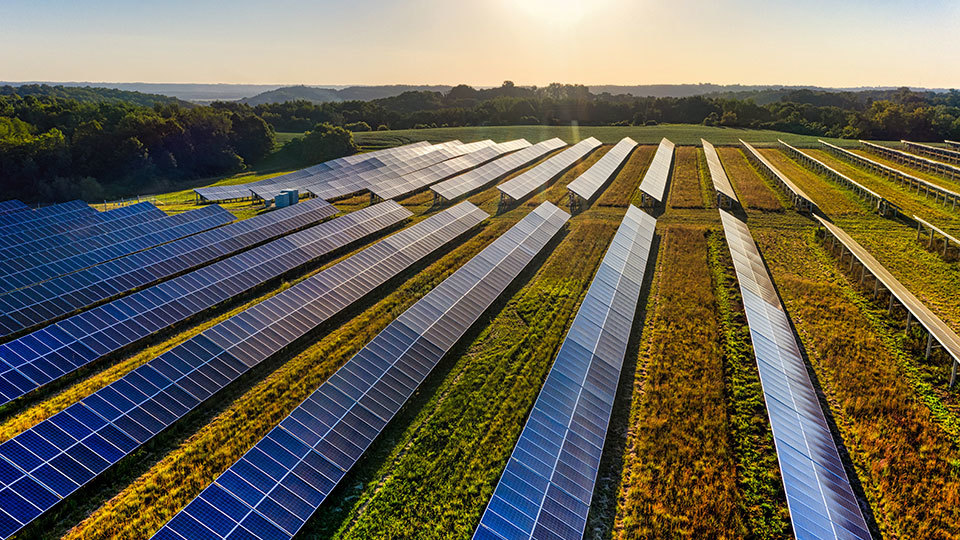
On August 1st, the Shenzhen Municipal People's Government issued a notice on the implementation plan for the national carbon peak pilot (Shenzhen), which points out that focusing on parks, public institutions, public facilities, transportation infrastructure, etc., vigorously develop distributed photovoltaics and expand the diversified utilization scope of 'photovoltaics +'. Pilot applications of thin-film photovoltaics are encouraged to promote building-integrated photovoltaics (BIPV) construction. Ensure cooperation in developing the 2 million kilowatt offshore wind power project in Shanwei Honghai Bay. Promote high-standard construction of waste incineration power generation projects and carry out biomass power generation coupled with coal to achieve harmlessness, reduction, and resource utilization of municipal waste. Explore pilot projects for renewable energy generation such as shallow geothermal energy, wave energy, and tidal energy. During the 14th Five-Year Plan period, a cumulative increase of photovoltaic installed capacity of 1.5 million kilowatts; by 2030, photovoltaic installed capacity will reach 2.4 million kilowatts.
Optimize the energy structure for buildings. Increase the proportion of clean electricity consumption in building energy use and improve terminal electrification levels; promote full electrification in newly constructed public buildings and gradually implement electrification renovations in existing public buildings where conditions permit. Encourage new construction and renovation projects to achieve full coverage of building-integrated photovoltaics; continue to carry out post-evaluation work on renewable energy applications in buildings. Strengthen coordination between building energy use and the grid to prioritize renewable energy consumption. Pilot construction of 'photovoltaic-storage-direct-flexible' projects that integrate photovoltaic power generation, chemical energy storage, direct current distribution, and electric vehicle charging/swapping. By 2025, pilot construction of more than 10 'photovoltaic-storage-direct-flexible' projects; by 2030, complete more than 100 building-integrated photovoltaic projects and 'photovoltaic-storage-direct-flexible' projects combined.
Anhui: Implement differentiated electricity pricing policies for high-energy-consuming industries and improve the ladder pricing system for high-energy-consuming industries.
Recently, the Anhui Provincial People's Government issued a notice on implementing the action plan for continuous improvement of air quality in Anhui Province, which mentions leveraging price tax policies for incentives and constraints. Improve peak-valley time-of-use electricity pricing policies and adjust peak electricity pricing policies. Implement differentiated electricity pricing policies for high-energy-consuming industries and improve the ladder pricing system for high-energy-consuming industries. Continue to implement supportive pricing policies for two-part electricity usage at port terminals; apply single commercial industrial pricing for port cargo handling services, port facility services, port shore power operators, and airport ground power usage. Encourage cities to actively support charging for new energy city public buses.
Beijing: Promote green low-carbon development in key areas and accelerate the development of new energy and renewable energy.
On August 1st, the Beijing Municipal People's Government website published 'Implementation Opinions from the Beijing Municipal Committee of the Communist Party of China and Beijing Municipal People's Government on Comprehensively Building a Beautiful Beijing and Accelerating Modernization Harmonizing Human-Nature Relations'.
'Implementation Opinions' propose promoting green low-carbon development in key areas. Optimize energy structure by strictly controlling fossil energy utilization scale; accelerate development of new energy and renewable energy; improve low-carbon supply levels in energy supply and electrification levels in energy consumption; accelerate building a new power system while orderly expanding external green electricity scale. Accelerate constructing a modern industrial system; improve industry access standards guided by green low-carbon principles; promote green low-carbon development in newly added industries. Reduce petrochemical and cement production capacity in Beijing; build green factories, green parks, and green supply chains; implement clean production level enhancement projects; accelerate existing industries' transition to green low-carbon practices. Optimize transportation structure; improve comprehensive support policies such as strong industry support for new energy vehicles; accelerate construction of charging/swapping stations and hydrogen refueling stations; promote 'oil-to-electricity' or 'oil-to-hydrogen' transitions for public vehicles. Promote greening transformations at railway stations, civil airports, logistics parks; build clean transport fleets. Vigorously advance green development in buildings; focus on promoting ultra-low-energy buildings' construction as well as energy-saving green renovations for existing public buildings; promote low-carbon green transformation in heating systems; advocate technologies like building-integrated photovoltaics. By 2027, stabilize natural gas consumption while reducing it slightly; continue decreasing gasoline/diesel consumption with renewable energy consumption reaching about 20%; by 2035 significantly reduce natural gas/gasoline consumption with renewable energy consumption reaching about 35%.
Key words:
Latest developments
Address: Floor 10, 18, 19 and 20, East Building, Building 1, Shun Tai Square, 2000 Shun Hua Road, High-tech Zone, Jinan City


