

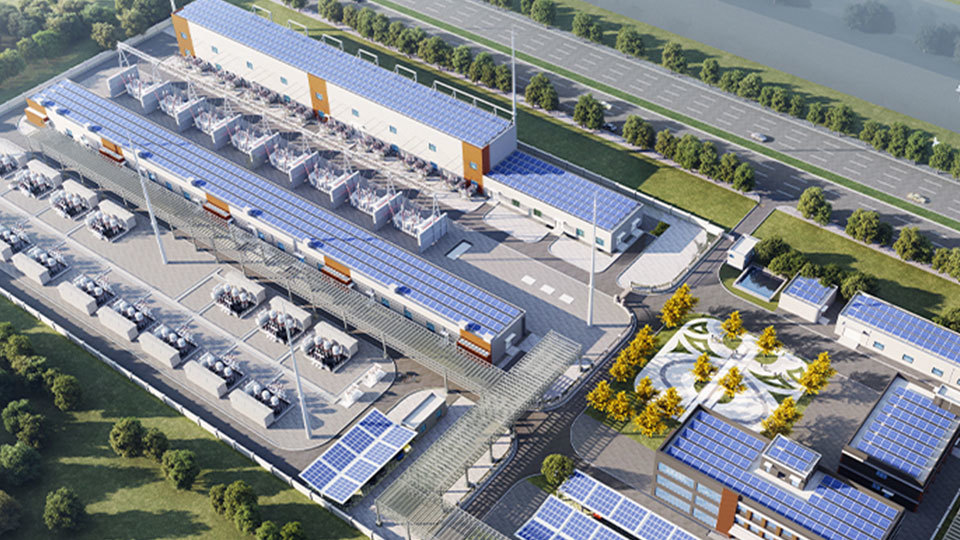

Huaneng Design Institute
Design consulting EPC general contracting project supervision and other whole process professional service institutions
Five departments jointly issued: Implement the replacement of non-fossil energy such as photovoltaics and wind power, explore the application of virtual power plants, energy storage, and flexible regulation technologies.
On July 23, the National Development and Reform Commission, the Ministry of Industry and Information Technology, the Ministry of Ecology and Environment, the State Administration for Market Regulation, and the National Energy Administration jointly released the "Special Action Plan for Energy Conservation and Carbon Reduction in the Electrolytic Aluminum Industry" (hereinafter referred to as the "Plan").
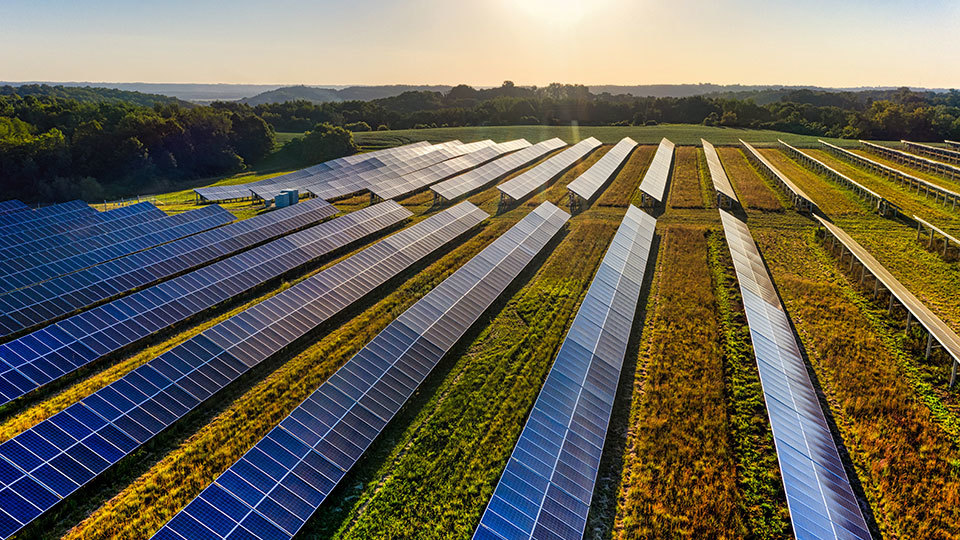
The "Plan" states thatnon-fossil energy substitution will be implemented. Actively support electrolytic aluminum enterprises to expand the application of non-fossil energy such as wind power, photovoltaics, hydropower, and biomass energy, and in principle, no new self-built coal-fired units will be added. Support existing self-built coal-fired units to implement clean energy substitution.Encourage electrolytic aluminum enterprises to participate in the construction of microgrids mainly for absorbing renewable energy, explore the application of virtual energy storage and flexible control technology for aluminum electrolysis, and improve the matching ability of project electricity load regulation. Support electrolytic aluminum enterprises to actively increase renewable energy consumption through green certificate green electricity trading and the construction of renewable energy power generation projects.Promote electrolytic aluminum enterprises to adopt clean low-carbon transportation methods such as closed belt corridors, new energy vehicles and ships, railways, and waterways based on actual conditions. By 2025, the proportion of clean transportation will reach about 70%, and the proportion in key areas for air pollution prevention will reach about 80%.

The "Plan" specifies that by the end of 2025, the proportion of production capacity above the benchmark level of energy efficiency in the electrolytic aluminum industry will reach 30%, production capacity below the benchmark level will complete technological transformation or be eliminated, the proportion of renewable energy utilization in the industry will reach over 25%, and recycled aluminum production will reach 11.5 million tons. Through implementing energy-saving and carbon-reduction transformations, the electrolytic aluminum industry is expected to achieve an energy saving of about 2.5 million tons of standard coal and a reduction of carbon dioxide emissions by about 6.5 million tons from 2024 to 2025.
By the end of 2030, the unit product energy consumption and carbon emissions in the electrolytic aluminum industry will significantly decrease, renewable energy usage will further increase, important breakthroughs will be made in energy-saving and carbon-reduction technologies such as low-temperature aluminum electrolysis, new continuous anode electrolysis cells, inert anode aluminum electrolysis, and recycling aluminum utilization. The supply capacity of high-end aluminum products will be greatly enhanced, achieving significant results in green low-carbon development in the industry.
The "Plan" proposes optimizing industrial layout and capacity control. Strictly implement the capacity replacement policy for electrolytic aluminum; no new electrolytic aluminum capacity will be added in key areas for air pollution prevention. New construction and expansion projects for electrolytic aluminum must meet benchmark energy efficiency levels and A-level environmental performance standards; main energy-consuming equipment must meet advanced energy efficiency levels. Comprehensive use of environmental protection, energy conservation, safety, technology, quality, and other means to legally exit and dispose of backward low-efficiency electrolytic aluminum capacity; accelerate the elimination of prebaked anode aluminum electrolysis cells below 200kA. Capacity exit projects must comply with requirements such as dismantling power devices, sealing electrolysis cells, and scheduled demolition. Reasonably control exports of high-energy-consuming low-value-added products such as aluminum ingots.
The "Plan" requires vigorously promoting energy-saving and carbon-reduction transformations. Promote large-scale aluminum electrolysis cells; support implementing energy-saving transformations for new stable flow insulated aluminum electrolysis cells. Encourage using high-strength steel materials, low-friction bearings, efficient motors, etc., to optimize cell structures; strengthen energy flow optimization and waste heat recovery for aluminum electrolysis cells. Promote high-efficiency stable aluminum electrolysis technologies such as optimized operation of electrolysis cells, graphite cathodes reducing cathode voltage drop through phosphorous pig iron pouring, reducing electrolyte voltage drop, etc. Encourage using high-quality anode materials and surface coating technologies to reduce anode consumption. Promote upgrading energy-consuming equipment in the electrolytic aluminum industry; promote advanced equipment such as efficient rectifiers, intelligent cell control systems, online monitoring equipment, multifunctional intelligent cranes; accelerate eliminating inefficient outdated fans, motors, pumps, etc.
The "Plan" states that non-fossil energy substitution will be implemented. Actively support electrolytic aluminum enterprises to expand the application of non-fossil energy such as wind power, photovoltaics, hydropower, and biomass energy; in principle no new self-built coal-fired units will be added; support existing self-built coal-fired units to implement clean energy substitution.Encourage electrolytic aluminum enterprises to participate in building microgrids mainly for absorbing renewable energy; explore applying virtual storage technology for aluminum electrolysis and flexible control technology to improve project electricity load regulation matching ability. Support electrolytic aluminum enterprises to actively increase renewable energy consumption through green certificate green electricity trading and constructing renewable energy power generation projects. Promote electrolytic aluminum enterprises to adopt clean low-carbon transportation methods such as closed belt corridors, new energy vehicles and ships, railways, waterways based on actual conditions. By 2025, clean transportation proportion will reach about 70%, with key areas for air pollution prevention reaching about 80%.
The "Plan" proposes promoting collaborative green development along the industrial chain. Guide electrolytic aluminum enterprises to optimize raw material schemes by controlling alumina quality, reducing impurity content in alumina, purifying anode cover materials to enhance product quality such as alumina and anodes/cathodes used in aluminum production. Encourage electrolytic aluminum enterprises to extend their industrial chains; accelerate developing high-end green products like aluminum alloy materials, aluminum-based composite materials, deep-processed aluminum products. Support recycling industries for recycled aluminum; improve recycling systems for aluminum products; establish standards for slag disposal from furnaces or recycling processes; enhance comprehensive utilization levels for waste aluminum materials.
The "Plan" also proposes promoting digitalization and intelligent upgrades. Accelerate innovative applications of next-generation information technologies such as 5G, big data, artificial intelligence, cloud computing, Internet of Things in the electrolytic aluminum industry; promote digitalization and intelligent upgrades across industries. Support enterprises in upgrading their electrolytic aluminum production lines intelligently; promote applications like digital intelligent electrolysis cells; autonomous driving for roasting stack cranes; online automatic cleaning for roasting blocks/residual poles; enhance adaptive control capabilities for electrolysis cells.
Latest developments
Address: Floor 10, 18, 19 and 20, East Building, Building 1, Shun Tai Square, 2000 Shun Hua Road, High-tech Zone, Jinan City


