

Huaneng Design Institute
Design consulting EPC general contracting project supervision and other whole process professional service institutions
Notice of the National Energy Administration on Actively Promoting the Mode of Cooperation between the Government and Social Capital in the Energy Sector

National Energy Law Reform [2016] No. 96

National Energy Administration on the active promotion in the field of energy
Notification of the government and social capital cooperation model.
Development and Reform Commission (Energy Bureau) of all provinces (autonomous regions and municipalities) and Xinjiang Production and Construction Corps:
In order to implement the "Guiding Opinions of the State Council on Innovating Investment and Financing Mechanisms in Key Fields to Encourage Social Investment" (Guo Fa [2014] No. 60) and the "Notice of the General Office of the State Council on Forwarding the Guiding Opinions of the Ministry of Finance Development and Reform Commission and the People's Bank of China on Promoting Government and Social Capital Cooperation Models in the Field of Public Services" (Guo Fa [2015] No. 42), you are hereby notified of the relevant matters concerning the active promotion of the Public-Private Partnership (PPP) in the energy sector as follows:
1. significance
Promoting cooperation between the government and social capital in the energy field is conducive to breaking the unreasonable restrictions on social capital entering energy infrastructure and public services, introducing social capital innovation mechanism, and improving supply efficiency; it is conducive to straightening out the relationship between the government and the market, deepening the reform of the administrative system, effectively transforming government functions, and giving full play to the decisive role of the market in allocating resources; it is conducive to improving the level of regional energy public services, let the people enjoy more of the fruits of energy reform and development.
General 2. requirements
(I) overall objective
Through the use of the government and social capital cooperation model, reform the public service supply mechanism in the field of innovative energy, broaden investment and financing channels, fully mobilize the enthusiasm of social capital to participate in the construction of energy projects, effectively improve the level of public services in the energy field, and meet the people's energy security, Requirements for reliable and clean supply.
(II) basic principles
Encourage entry. Actively enrich PPP energy project reserves, increase project initiation, actively create an atmosphere of public opinion, and fully mobilize the enthusiasm of social capital to participate in the construction of energy projects.
Policy support. Actively coordinate with relevant departments to improve the energy sector PPP project land use, tax incentives, price adjustment, credit support and other mechanisms to create a good policy environment.
Optimize services. In the project approval, policy funds application, the implementation of the country's existing fiscal policy and other aspects of the initiative, optimize services, to ensure the smooth development of eligible PPP energy projects.
Benefit people's livelihood. Strengthen supervision, organically combine the government's policy objectives, social objectives with the operational efficiency and technological progress of social capital, promote social capital competition and innovation, and ensure the maximization of public interests.
3. scope of application
Energy authorities at all levels promote the cooperation model between the government and social capital in the energy field, and should do a good job in the preliminary investigation of the project, organize the implementation of the project in accordance with the law, implement the agreement in accordance with the agreement, and strictly supervise the performance.
The promotion of PPP in the energy sector is mainly applicable to public services and infrastructure projects that the government is responsible for providing and suitable for market-oriented operation. The scope of PPP promotion in the energy sector includes but is not limited to the following projects:
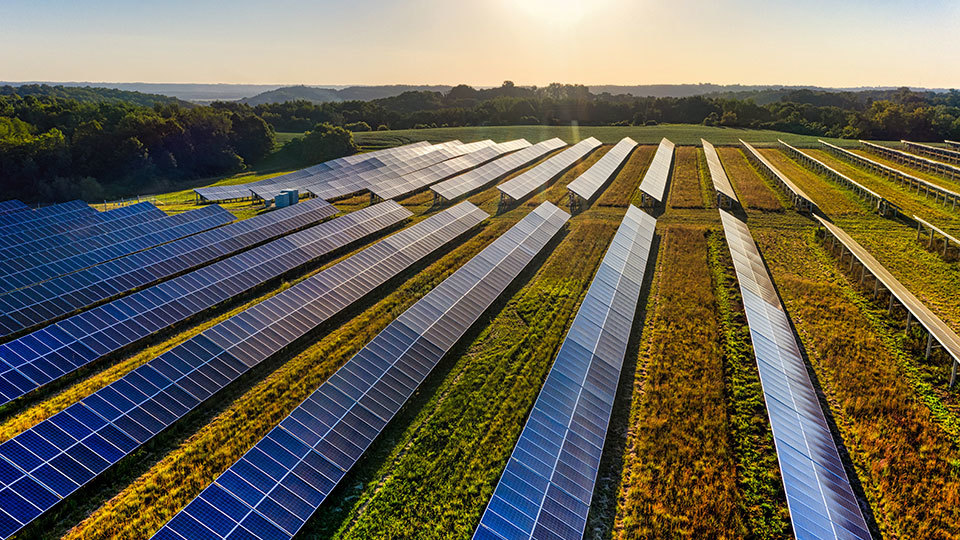
Electric power and new energy projects: power supply/urban distribution network construction and renovation, rural power grid renovation and upgrading, power transmission projects with clear asset interface, charging infrastructure construction and operation, distributed energy power generation projects, microgrid construction and renovation, smart grid projects, energy storage projects, photovoltaic poverty alleviation projects, hydropower projects, cogeneration, electric energy substitution projects, nuclear power equipment development and service fields, etc.
Oil and gas projects: oil and gas pipeline network backbone/branch, urban gas distribution network and urban gas storage facilities, liquefied natural gas (LNG) receiving station, oil and gas storage facilities, etc.
Coal projects: CBM gas transmission pipeline network, compression/liquefaction station, gas storage, gas power generation, etc.
4. rich project reserves
Energy authorities at all levels should, in accordance with the principles of reasonable project layout and effective allocation of government investment, carefully sort out and scientifically screen, and actively select potential projects suitable for the PPP model from new construction and reconstruction projects or stock public assets that are in line with energy planning and industrial policies. Incorporate into the national PPP project database of the National Development and Reform Commission, and do a good job of docking with the PPP comprehensive information platform of the Ministry of Finance. Continuously explore and broaden the scope of energy PPP projects, enrich project reserves in a timely manner, and regularly update the release on the Internet.
5. standard and orderly advance the project
Energy authorities at all levels shall organize the implementation of projects in accordance with the relevant management measures of the National Development and Reform Commission and the Ministry of Finance on PPP work. For projects that need to be franchised, PPP projects in the energy sector should be promoted in a standardized and orderly manner in accordance with the Measures for the Administration of Infrastructure and Public Utilities Franchise (Order No. 25 of the National Development and Reform Commission). From the PPP project reserve, energy construction projects with mature conditions should be selected as alternative projects, and the bidding agency should be entrusted to draw up bidding documents, and the project undertaking units should be determined by means of open bidding, competitive negotiation and competitive consultation.
6. policy safeguards
(I) simplify PPP project approvals
Establish a green channel for the approval of energy PPP projects. Speed up the project approval, simplify the audit content, optimize the processing process, shorten the processing time limit. Involving planning, land, environmental protection and other approval matters, should actively promote the relevant departments to establish a PPP project joint review mechanism. Accelerate the opening of the project approval online platform, open the whole process of project approval information, and further improve the efficiency of administrative services.
(II) to push forward energy price reform
According to the spirit of the "Several Opinions of the Central Committee of the Communist Party of China and the State Council on Promoting the Reform of the Price Mechanism" (Zhongfa [2015] No. 28), by 2017, prices in competitive fields and links will be basically liberalized. We will straighten out natural gas prices as soon as possible, speed up the liberalization of natural gas sources and sales prices, orderly liberalize on-grid electricity prices and sales electricity prices other than public welfare, and establish a mechanism in which energy prices are mainly determined by the market. to create favorable conditions for social capital to invest in the energy sector.
(III) Explore Innovative Financial Subsidy Mechanism
For PPP projects such as renewable energy and distributed photovoltaic power generation, natural gas distributed energy and heating, rural power grid transformation and upgrading, photovoltaic poverty alleviation, shale gas development, coalbed methane extraction and utilization, which meet the conditions of financial investment subsidies, energy authorities at all levels should actively explore mechanism innovation and policy innovation, and encourage financial subsidies to tilt towards the above PPP projects.
(IV) to strengthen financial cooperation
Energy authorities at all levels should actively help project undertaking units to connect with PPP financing support funds at all levels to improve the availability of project financing. Strengthen communication and cooperation with banks and other financial institutions, and increase credit support for PPP projects in the energy sector.
(V) Timely third-party assessment
Give full play to the role of the Federation of Industry and Commerce in linking private enterprises. To promote cooperation between the government and social capital in the energy field, we must fully listen to the opinions and suggestions of the Federation of Industry and Commerce and private enterprises. According to the progress of the project, third-party intermediaries such as the Federation of Industry and Commerce may be entrusted to carry out the implementation evaluation of PPP projects in the energy sector.
7. demonstration and promotion and summary improvement
Doing a good job in PPP projects in the energy sector is a new thing. Energy authorities at all levels should actively explore and boldly try to encourage social capital to invest in energy PPP projects. The difficulties and problems encountered in the implementation of the project should be actively studied and coordinated to solve. The National Energy Administration will promptly summarize the experience explored by various regions, select good practices to be demonstrated and promoted nationwide, and continue to innovate and improve the level of cooperation between the government and social capital in the energy field.
National Energy Administration
March 31, 2016
Latest developments
Address: Floor 10, 18, 19 and 20, East Building, Building 1, Shun Tai Square, 2000 Shun Hua Road, High-tech Zone, Jinan City


