

Huaneng Design Institute
Design consulting EPC general contracting project supervision and other whole process professional service institutions
Actively adapt to the reform of the power system and further promote the reform of energy marketization.
[China Aluminum Network] Recently, Li Keqiang, member of the Standing Committee of the Political Bureau of the CPC Central Committee, Premier of the State Council, and Director of the National Energy Commission, presided over a meeting of the National Energy Commission to review and approve the "Thirteenth Five-Year Plan for Energy Development" and deploy and promote related work. This is the second meeting of the new National Energy Commission (the first meeting in April 2014) after a lapse of two years. The National Energy Commission will discuss energy planning, highlighting the status of the energy industry and the importance of energy strategic planning.
In the past 30 years, the national energy strategy has focused on increasing supply and meeting demand. It is manifested in the rapid development of traditional energy projects such as coal, electricity, oil and gas, rapid expansion of production capacity, substantial increase in energy consumption, prominent ecological and environmental problems, and rigid management systems and market mechanisms., Energy policy continues to swing, and energy strategy orientation is unclear.
With the passage of time, China has become a big country of energy production and consumption in the world, with the largest energy system, the largest energy market and the largest energy network in the world. If the old development model is continued, it is no longer sustainable. Based on this, energy supply-side reform should be the main line of future work. This includes reforming the energy production and consumption structure, reforming the energy system and mechanism, and accelerating technological innovation. The goal is to build a clean, low-carbon, safe and efficient modern energy system, reduce the cost of the energy system, improve the level of energy innovation, improve the efficiency of the energy system, and improve the national economy. Competitiveness. Under this goal, we have to adjust the course of the big ship of the energy industry.
stock control coal consumption
Increase the scale of clean energy.
China has promised the international community that the proportion of non-fossil energy consumption will reach about 15% by 2020. Accelerating the development and utilization of clean energy and the clean utilization of fossil energy are the two core tasks.
15% is a constraint indicator. The path to achieve this goal is to accelerate the development of clean energy such as hydropower, wind power, and photovoltaics, and strictly control the installed capacity of coal and electricity, that is, on the basis of strictly controlling the increase in the consumption of fossil energy in stock, increase the proportion of renewable energy in the incremental market.
Based on the 15% consumption of non-fossil energy, relevant industry research believes that in 2020, the installed capacity of non-fossil energy power generation will reach 0.77 billion kilowatts, the installed capacity will increase to 39%, and the proportion of power generation will increase to 31%; the installed capacity of natural gas power generation will reach 0.11 billion kilowatts; the installed capacity of coal and electricity will be controlled within 1.1 billion kilowatts, and the installed capacity will be reduced to about 55%.
In terms of energy varieties, hydropower has been developed and utilized on a large scale in recent years, and the installed capacity of hydropower in regular has exceeded 0.3 billion kilowatts. Under the constraints of ecological protection, immigration and other issues, hydropower development costs are high and the cycle is long. The southwest region is also facing serious water abandonment problems, and the growth rate of new hydropower installations will drop sharply. According to the "13th Five-Year Plan" of electric power, about 40 million kilowatts will be put into production during the "13th Five-Year Plan" period, and the average annual new installed capacity is only 8 million kilowatts, which is far lower than the average annual growth rate of 20 million kilowatts during the "Twelfth Five-Year Plan" period.
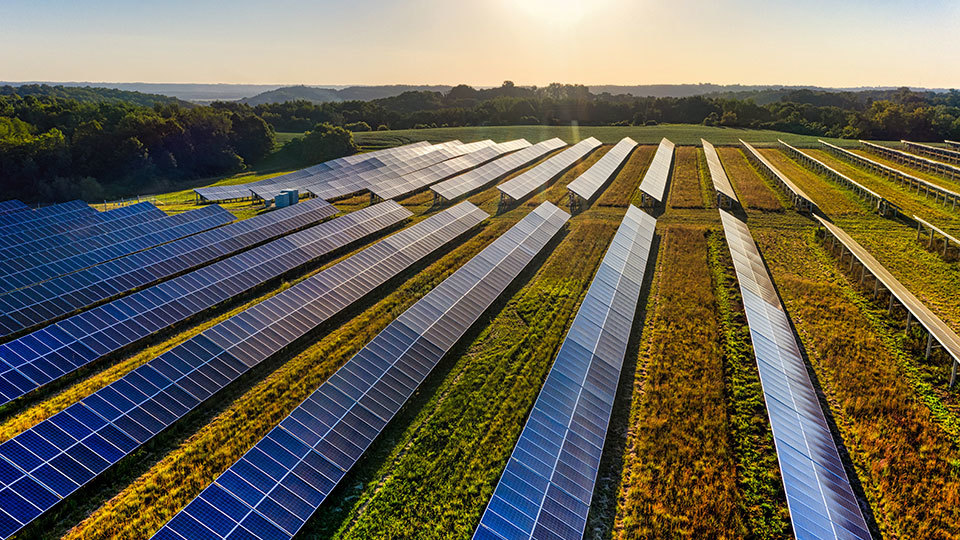
After the rapid development stage of the "Twelfth Five-Year Plan", clean energy represented by wind power and photovoltaics still has a lot of room for development. According to the preliminary "13th Five-Year" renewable energy development goals, by 2020, the installed capacity of wind power will reach more than 0.21 billion kilowatts, and if conditions permit, strive to reach 0.25 billion kilowatts; solar power generation will ensure that it reaches more than 0.11 billion kilowatts, and if conditions permit, strive to reach 0.15 billion kilowatts. Among them, solar thermal power generation and strive to reach 5 million kilowatts.
From the starting point of the policy, the state has set a bottom line target and a higher target for new energy, and the planning target is expected, not a binding indicator. Technological progress and cost reduction are the main driving forces of the new energy industry. With the continuous improvement of the competitiveness of new energy, the scale and space of development will not be restricted. In terms of policy orientation, the state clearly proposes to achieve grid parity in 2020, and the new energy financial subsidy policy gradually declines, which actually forces the new energy industry to participate in market competition.
Coal consumption and the development of the coal power industry are strictly controlled, and there is a trade-off relationship with new energy. At present, China's coal consumption accounts for 47% of the world, under greater international pressure. Under the pressure of energy structure adjustment and climate change, coal consumption is facing stricter restrictions, and the floodgate of coal power industry capacity expansion, which accounts for half of coal consumption, has been closed. According to the national policy, the coal power projects under approval and construction have been "canceled or suspended for approval and construction". It is estimated that more than 0.15 billion kilowatts of coal power construction projects will be canceled and postponed during the 13th Five Year Plan period, and the installed capacity of coal power will be controlled within 1.1 billion kilowatts, accounting for 55% of the power supply structure.
Oil and gas consumption has taken the initiative to enter the downward range amid the economic slowdown. Unlike oil, natural gas as a clean energy, from the policy orientation is still to encourage development, encourage natural gas power generation, natural gas peak shaving. The state encourages the construction of a number of natural gas peak shaving power stations in North China, East China, South China, Northwest China and other regions; supports coal-bed methane and blast furnace gas power generation, promotes the application of distributed gas power, and focuses on the development of thermal power and cooling multi-supply. During the "13th Five-Year Plan" period, an additional 50 million kilowatts are expected to be put into operation, reaching more than 0.11 billion kilowatts in 2020. According to the calculation of 3000 hours of natural gas power generation and utilization, gas-fired power generation is 330 billion kilowatt-hours, which needs to match the natural gas resources of about 66 billion cubic meters, which will be divided into three parts with urban gas and industrial gas.
Don't break, don't stand
take the initiative to adapt to market-oriented reform
From the first round of power system reform initiated during the "Tenth Five-Year Plan", to the reform of the oil and gas price mechanism promoted during the "Eleventh Five-Year Plan", to the second round of power system reform currently being promoted, the reform runs through the entire process of the energy industry. The background of the reform is different, the goal of the reform is different, and the implementation of the reform is also different.
For example, the purpose of the refined oil pricing mechanism launched in 2008 is to straighten out the domestic and foreign markets, supply and demand reaction price signals, so that the oil and gas price reform is at the forefront of the energy industry. At this stage, in addition to deepening the price reform, the oil and gas market reform will also focus on the reform of mineral rights, the reform of oil and gas pipeline network, the reform of oil and gas circulation, the reform of state-owned oil and gas enterprises, and the reform of oil and gas legislation.
Premier Li Keqiang of the State Council emphasized at the meeting of the National Energy Commission that it is necessary to deepen the reform of energy marketization, through streamlining administration and delegating power, combining decentralization, optimizing services, reforming the oil and gas mining rights system, and straightening out the transmission and distribution price links, etc., to deepen the reform of energy state-owned enterprises At the same time, actively support the private economy to enter the energy field. We will improve the mechanisms and policies to encourage the development of distributed energy, straighten out the energy price system, restore the attributes of energy commodities, give full play to the decisive role of the market in allocating resources and give better play to the role of the government, and build an energy market system with fair competition.
In a nutshell, the "13th Five-Year Plan" and future energy market reforms focus on three aspects: energy prices, energy access, and energy management. The essence of energy price reform is to remove administrative control, supply and demand to form prices, and establish a fully competitive and free energy market. At present, the price reform of coal and oil and gas is in the forefront, and the reform of the power system and the reform of the electricity price formation mechanism are important tasks during the "13th Five-Year Plan" period.
Energy access reform refers to breaking administrative monopoly and natural monopoly, giving social capital equal opportunities to participate in energy investment, construction and operation, fully mobilizing the resources of the whole society, and improving the market activity of oil, gas and coal power industries.
Energy management reform means that the central government departments take the initiative to cut power, self-revolution, energy investment, prices, trading power to the market. In the management mode of local government, we should break the inherent interests and traditional development ideas, and actively adapt to the general trend of market-oriented reform and energy cleaning. For example, in order to protect the development of local traditional coal and electricity enterprises, some local governments refuse to accept the delivery of clean hydropower, wind power and photovoltaic power generation, even if the price of hydropower is much lower than that of local coal and electricity. In order to ensure the living space of local oil and gas enterprises, the pace of electricity substitution has been slowed down. Some resource provinces are still approving coal mines, regardless of ecological and environmental problems and energy market trends. Some regions still regard centralized energy development as the main form, the advantages of decentralized energy development are not yet realized.
Latest developments
Address: Floor 10, 18, 19 and 20, East Building, Building 1, Shun Tai Square, 2000 Shun Hua Road, High-tech Zone, Jinan City


