


Huaneng Design Institute
Design consulting EPC general contracting project supervision and other whole process professional service institutions
Policy Interpretation | Technological Innovation Driven: Technology Safeguards a New Chapter in Census
Technological innovation driven: Technology safeguards a new chapter in the census.
Water Resources Planning and Design General Institute Li Sheng
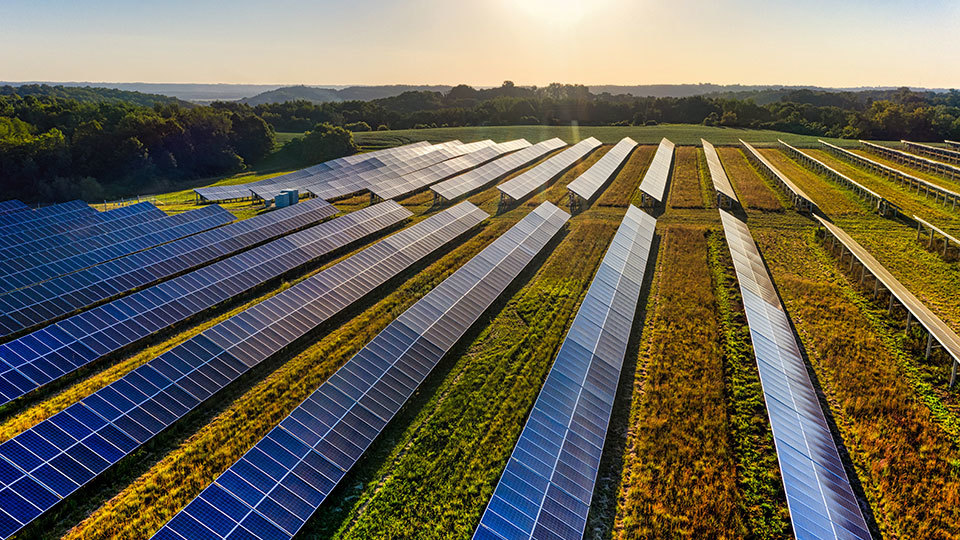
Wind power and photovoltaic power generation, as key forces in building a new energy system, are important supports for promoting the green and low-carbon transformation of energy, achieving carbon peak and carbon neutrality, and are also an inevitable choice for ensuring national energy security. Recently, six ministries including the National Development and Reform Commission, the National Energy Administration, the Ministry of Natural Resources, the Ministry of Ecology and Environment, the China Meteorological Administration, and the National Forestry and Grassland Administration jointly issued a notice on conducting pilot work for wind power and photovoltaic power generation resource surveys (hereinafter referred to as the 'Notice'), proposing to carry out resource surveys for wind power and photovoltaic power generation, with specific tasks interpreted from five aspects.
1. Unify technical standards system and clarify resource survey guidelines.
As the foundation for industry development, resource surveys have been conducted four times nationwide over the past decade, providing an important working basis for industry development. The first four surveys mainly focused on wind energy resource characteristics, and the most recent survey was over ten years ago. There has not yet been a systematic nationwide survey of photovoltaic power generation resources. With the leapfrog development of wind and photovoltaic power generation at scale, some provinces have conducted local resource surveys based on work needs. However, due to unclear standard systems and inconsistent technical routes, there are significant differences in survey results, lacking uniformity, authority, and clear guiding significance.
In response to the diversity of wind and solar resource characteristics, terrain features, and development utilization forms in our country, closely combining with the latest trends in wind and solar technology development under the new era and new situation, the 'Notice' clearly states that during the pilot preparation stage, a technical standard guideline for surveys will be organized. This will form a systematic and standardized standards system from aspects such as basic data requirements, resource assessment methods, assessable capacity evaluation methods, and survey result compilation. This ensures that each pilot area can follow regulations to scientifically conduct survey work while continuously improving the standards system based on pilot area work effectiveness to provide strong guidance and support for conducting surveys nationwide.
2. Build a comprehensive data foundation to solidify support for survey results.
The completeness and accuracy of basic data are fundamental to conducting wind power and photovoltaic power generation resource surveys. The 'Notice' clearly states that basic data collection work should be completed during the pilot preparation stage. The basic survey data can be roughly divided into three categories: first is basic data on development status, mainly including current development status, land use status, equipment conditions; second is meteorological basic data, mainly covering wind energy and solar energy resource measurement data; third is data on development elements including terrain data, national land 'three adjustments', forestry and grassland data, etc. In addition, it is necessary to comprehensively sort out national and local policies and planning documents related to land use requirements for wind and solar development to clarify the boundaries of wind and solar development utilization.
Based on relevant basic data from various departments and control requirements, technical means will be used for data integration to identify, analyze, and extract conditions for developable resources of wind power and photovoltaic power generation in various regions. This will clarify areas suitable for developing wind power and photovoltaic power generation.
3. Build a resource observation network to accurately assess resource characteristics.
Wind and solar resource observation data is fundamental for accurately assessing wind and solar resource conditions. Wind and solar resource assessment is the cornerstone of assessable capacity evaluation; it is one of the decisive factors ensuring the development utilization of wind farms and photovoltaic power stations. It also guides technological innovation in wind and solar resources while optimizing their development utilization to promote industrial development.
'Notice' clearly states that during the pilot preparation stage, preliminary preparations for building a wind-solar resource observation network should be completed. Existing meteorological observation data as well as measurement data from existing or under-construction stations should be fully utilized to construct regional resource observation networks as needed. Based on observation data, refined numerical simulations of wind-solar resources will be conducted; through spatial distribution data analysis, thresholds for usable area resource assessments will be clearly set to identify usable areas scientifically while assessing regional wind-solar resource conditions, temporal-spatial distribution characteristics, generation characteristics etc., promoting innovative developments in wind-solar technology and utilization methods to provide solid data support for ensuring national energy security.
4. Innovate survey work methods to build an intelligent survey work platform.
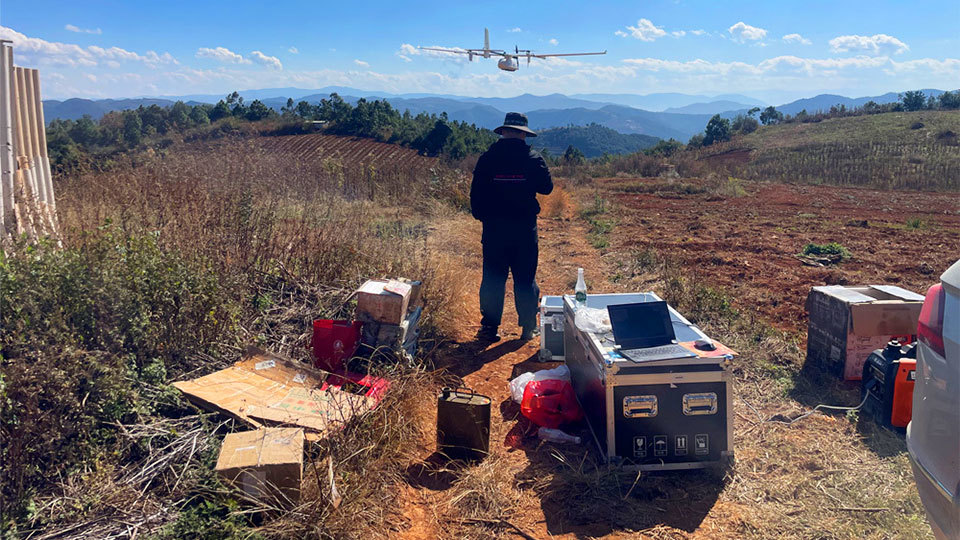
To ensure technical standardization and consistency in survey work, this survey will establish a unified working platform that implements unified working standards and processes. This platform integrates assessments of wind energy and solar energy resources while comprehensively considering factors such as terrain, geomorphology (seabed), geological hazards, land use categories, marine environments, development utilization technologies etc., fully utilizing advanced technologies like big data, artificial intelligence, geographic information systems (GIS), satellite remote sensing etc., intelligently identifying suitable construction areas for wind turbine layouts or photovoltaic array zones; integrating spatial elements of land use at sea while connecting national policies with local policy documents regarding land use requirements for development at sea intelligently delineating usable areas for wind power generation and photovoltaic power generation. Through intelligent tools such as automatic layout planning constraints on dispersion degree equipment selection scale calculation etc., assessable capacity of wind power generation and photovoltaic power generation will be calculated achieving intelligent information-based efficient conduct of survey work on this platform.
5. Hierarchical assessment of assessable capacity to assist precise guidance of survey results.
According to the deployment in the 'Notice', this survey requires comprehensive mapping of theoretical assessable capacity and technical assessable capacity in each pilot area according to unified technical standards while conducting hierarchical assessments of technical assessable capacity. The classification of technical assessable capacity is divided based on dimensions such as resource conditions or generating capacity; on one hand distinguishing differences among varying levels of resources within the same type of energy source; on another hand clarifying differences in development utilization methods among different types of resources within the same site area. Through hierarchical classification of technical assessable capacity from an economic perspective helps clarify priorities in development utilization; from a comprehensive utilization perspective helps clarify methods for development utilization; from a planning guidance perspective helps clarify deployment layout timing effectively guiding orderly scientific future developments in regional wind power generation and photovoltaic power generation.
Key words:
Latest developments
Address: Floor 10, 18, 19 and 20, East Building, Building 1, Shun Tai Square, 2000 Shun Hua Road, High-tech Zone, Jinan City


