

Huaneng Design Institute
Design consulting EPC general contracting project supervision and other whole process professional service institutions
National Energy Administration: Regulate the order of the photovoltaic industry and reasonably guide the construction and release of upstream production capacity.


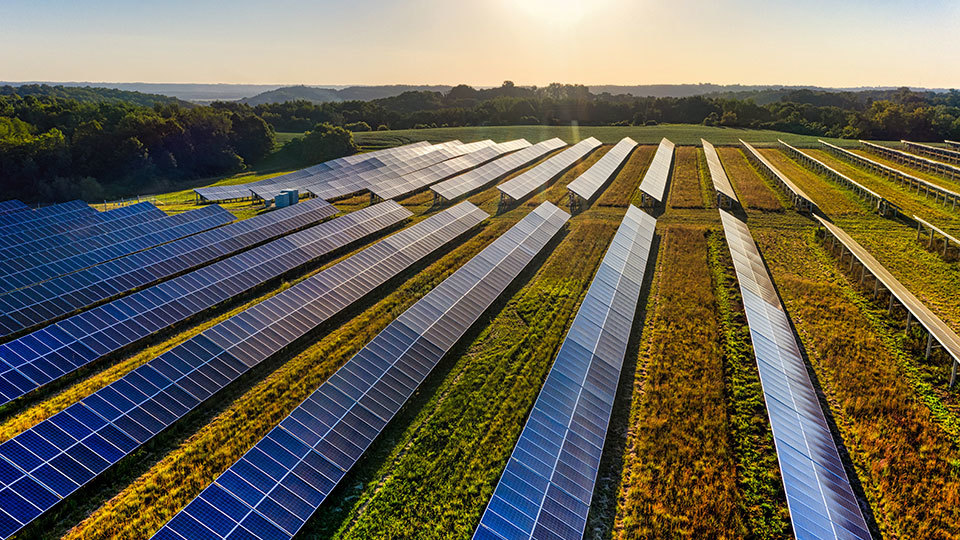
On June 20, at the press conference series themed "Promoting High-Quality Development," Li Chuangjun, Director of the New Energy and Renewable Energy Department of the National Energy Administration, stated that currently, the photovoltaic industry in China is indeed very competitive. To guide the healthy development of the industry, we will take the following measures: First, we need to consolidate the new installed capacity market for domestic photovoltaic power generation. A stable domestic market is the "foundation" and "ballast" for the continuous and healthy development of China's photovoltaic industry. We will adhere to both centralized and distributed development.On one hand, we will strengthen the construction of large-scale wind and photovoltaic bases focused on desert, gobi, and barren areas; on the other hand, we will steadily implement"The Action of Thousands of Households Benefiting from Solar Energy," vigorously developing distributed photovoltaic power generation.At the same time, we also need to accelerate the construction of a new energy infrastructure network to improve the grid's acceptance, allocation, and regulation capabilities for new energy generation, including photovoltaics. Secondly, we will strengthen multi-department coordination to standardize the order of the photovoltaic power generation industry. We will work with relevant departments to organize industry associations to timely release information on industry scale, capacity utilization rates, and market demand.Reasonably guide the construction and release of upstream photovoltaic capacity to avoid redundant low-end capacity construction and strive to create a good market environment.Finally, we also need to continuously enhance our photovoltaic technology innovation capabilities.Fully leverage the leading role of national energy R&D innovation platforms to direct resources towards supporting research and innovation in advanced technologies and capacities, promote key technology breakthroughs in efficient solar cells, and advance technological upgrades in key basic materials.Together with relevant departments, we will continue to strengthen the construction of a photovoltaic industry standard system, enhance standard innovation leadership, and promote healthy industrial development.Full text is as follows: Director of the News Bureau and Spokesperson of the State Council Information Office Shou Xiaoli:Ladies and gentlemen, good afternoon! Welcome to the press conference of the State Council Information Office. Today we are holding"Promoting High-Quality Development" series themed press conference. We are very pleased to invite Mr. Zhang Jianhua, Director of the National Energy Administration, to introduce the situation and answer questions that everyone is concerned about. Also attending today's press conference are Mr. Li Fulong, Director of the Development Planning Department of the National Energy Administration; Mr. Du Zhongming, Director of the Power Department; and Mr. Li Chuangjun, Director of the New Energy and Renewable Energy Department. Now, let's first invite Mr. Zhang Jianhua to give an introduction.Director of the National Energy Administration Zhang Jianhua:Ladies and gentlemen, good afternoon! I am very happy to meet with journalist friends to introduce the implementation of new energy security strategies and promote high-quality energy development. Energy is an important material foundation and driving force for economic and social development, closely related to national economy, people's livelihood, and national security. Since the 18th National Congress of the Communist Party of China, General Secretary Xi Jinping has attached great importance to energy work.In June 2014, he proposed a new energy security strategy of "Four Revolutions and One Cooperation," which provides fundamental guidelines for high-quality energy development in a new era in China. Over the past decade, we have deeply promoted energy consumption revolution, supply revolution, technology revolution, and system revolution while strengthening international cooperation in all aspects. The development of energy has achieved historic achievements that provide strong support for building a moderately prosperous society in all respects and starting a new journey towards building a modern socialist country. We have deeply practiced green development concepts and fully leveraged consumption-side transformation's guiding role; our energy consumption structure has continued to optimize while green low-carbon energy development has made new strides. From 2013 to 2023, coal consumption's proportion dropped from 67.4% to 55.3%, a cumulative decrease of 12.1 percentage points; non-fossil energy consumption's proportion (including wind power, solar power generation, hydropower, nuclear power, and biomass energy) increased from 10.2% to 17.9%, a cumulative increase of 7.7 percentage points. The ways industrial sectors such as transportation and construction use energy have undergone profound changes; oil product quality has achieved a "three-level upgrade" from National III to National VI standards contributing positively to air quality improvement. We have built the world's largest charging infrastructure system with significant improvements in economic development's "green content." We have deeply practiced an overall national security concept focusing on enhancing domestic resource production capacity ensuring that we hold our own "energy bowl" firmly in our hands; levels of stable energy supply have achieved new leaps forward.Shou Xiaoli:From 2013 to 2023, total primary energy production increased by a cumulative total of 35%, coal production capacity continued to strengthen with crude oil output maintained at around 200 million tons level; installed electricity capacity and natural gas output doubled. Wind power installed capacity grew from over 76 million kilowatts to over 440 million kilowatts—an increase nearly fivefold; photovoltaic installed capacity grew from over 19 million kilowatts to over 600 million kilowatts—an increase more than thirtyfold. In 2023 alone, newly added renewable energy generation capacity accounted for more than half globally with cumulative installed capacity nearing 40% worldwide.I noticed that the new energy system has become a key term in the energy sector. I would like to ask, where specifically does the 'new' in the new energy system manifest? What is the current progress? Thank you.Zhang Jianhua:Thank you for the reporter's question; I will answer this question. The new energy system is an inevitable choice to ensure national energy security. The report of the 20th National Congress of the Communist Party proposed a major strategic decision to accelerate the planning and construction of a new energy system, and the Central Economic Work Conference has made clear work arrangements for this for two consecutive years. This is the overall goal and strategic task for energy development in the new era. In the past two years, the National Energy Administration has deeply implemented the decisions and deployments of the Party Central Committee and the State Council, better coordinated high-quality development and high-level safety, continuously deepened understanding of the connotation and characteristics of the new energy system, and solidly promoted the implementation of various tasks and measures. The construction of the new energy system has made positive progress, mainly reflected infour aspects: First, a greener energy structure. In recent years, China's non-fossil energy supply has accelerated, with an average annual increase in the first three years of the 14th Five-Year Plan being 1.4 times that of the 13th Five-Year Plan, promoting an annual increase of 0.7 percentage points in the proportion of non-fossil energy consumption, and non-fossil energy power generation capacity historically exceeding thermal power. Second, stronger supply resilience. In 2023, the total production of primary energy such as coal and oil and gas reached 4.83 billion tons of standard coal. Currently, national power generation capacity exceeds 3 billion kilowatts. In recent years, crude oil production has stabilized at around 200 million tons, and natural gas production has increased by more than 10 billion cubic meters annually for seven consecutive years since 2017. The ability to adjust energy reserves continues to improve. Third, a newer industrial system. New energy generation technology remains world-leading, with photovoltaic cells and other 'new three items' becoming a 'new business card' for China's foreign trade exports. The first commercial demonstration project of a high-temperature gas-cooled reactor has been completed and put into operation. New models and new formats continue to emerge, with smart microgrids promoting integrated development of 'source-network-load-storage', and virtual power plants guiding electricity users to efficiently and actively participate in demand response. Fourth, a more solid governance foundation. The draft Energy Law has entered the review process of the National People's Congress; a multi-level unified electricity market system is steadily being built; regulatory systems for natural monopoly links in the energy sector are becoming more robust; policies such as green power certificates and renewable energy consumption responsibility weights are being deeply implemented. Next, we will further promote the construction of a new energy system, with ensuring energy security as our primary task, accelerating the establishment of a diversified energy supply system, reshaping the energy supply-demand pattern, promoting a collaborative transformation on the consumption side, and accelerating the development of new productive forces in energy.Director of the Electricity Department of the National Energy Administration Du Zhongming:Thank you for your question, dear reporter friend. As you have noted, some regions in China have experienced higher temperatures recently. Since this year, electricity consumption in China has continued to grow rapidly.From January to May, total electricity consumption reached 3.84 trillion kilowatt-hours, an increase of 8.6% year-on-year. During this summer peak period, national electricity load is also expected to grow rapidly, with peak load expected to increase by more than 10 million kilowatts year-on-year. After comprehensive assessment, we believe that during this summer peak period, national electricity supply is generally guaranteed; however, there may be localized electricity supply tightness during peak periods. If extreme or disastrous weather occurs, electricity supply tightness may further intensify. The National Energy Administration will aim for 'normal supply with flexibility, localized short-term tightness with measures in place, and contingency plans for extreme situations', tightening responsibilities across all parties to ensure safe and stable electricity supply during peak summer demand. We will also take several main measures: First is to strengthen monitoring and early warning. We have reported on the electricity supply-demand early warning results for summer peak demand in 2024 and 'one province one policy' work measures to guide key provinces and relevant enterprises to prepare in advance; currently, we monitor daily electricity usage nationwide as well as in key areas along with coal supply and unit output conditions to promptly coordinate solutions when issues arise. This approach achieved good results last year: through full organization and coordination efforts in May 2023, Yunnan Province's coordinated coal power achieved full capacity operation with monthly generation hitting a ten-year high effectively offsetting issues caused by drought leading to insufficient hydropower storage.Zhang Jianhua:Thank you for your question; I will answer this question. As you mentioned, energy is an important material foundation for economic and social development.'Since the start of the 14th Five-Year Plan', China's energy supply scale has grown by nearly 20%, effectively ensuring rapid growth in economic and livelihood energy needs. With deepening new industrialization and urbanization processes, it is expected that China's energy demand will continue to maintain rigid growth in the coming period requiring reliable guarantees for energy supply. At the same time, energy development also faces requirements from 'dual carbon' goals including achieving about 25% non-fossil fuel consumption by 2030 and reducing carbon emissions per unit GDP by over 65% compared to 2005 levels. Steadily advancing 'dual carbon' goals while effectively ensuring reasonable energy use demands for economic and social development is fundamental for high-quality energy development in future periods.To achieve these goals we will coordinate both energy security and low-carbon transition efforts from both supply and demand sides to promote high-quality development of energy on one hand by making reductions on consumption side through implementing '2024-2025 Energy Saving Action Plan', deeply implementing fossil fuel consumption reduction actions while strictly controlling coal consumption; continuously promoting transformation upgrades in ways of using energy across industries such as construction transportation agriculture etc., enhancing electric vehicle charging service capabilities aiming to build around twelve million charging infrastructures nationwide by 2025; striving towards achieving around thirty percent electrification level by terminal use by then on another hand we will enhance quality expansion on non-fossil fuel supplies through increasing development efforts on non-fossil fuels while coordinating nuclear power hydropower renewable energies utilization; strengthening system regulation capabilities improving grid acceptance configuration control capabilities towards clean energies; simultaneously using renewable green power certificate issuance trading as leverage promoting continuous expansion on green power consumption scale pushing more incremental demand met by non-fossil fuels aiming at increasing non-fossil fuel consumption share by one percentage point annually. Li Chuangjun:Thank you to this foreign journalist for the question. Solar energy, as a clean energy source, has increasingly attracted the attention of countries around the world in today's society. Currently, the photovoltaic industry in China is indeed very competitive. To guide the healthy development of the industry, we will take the following measures: First, we need to consolidate the new installed capacity market for domestic photovoltaic power generation. A stable domestic market is the 'basic plate' and 'ballast stone' for the sustainable and healthy development of our photovoltaic industry. We will adhere to a balanced development of centralized and distributed systems. On one hand, we will strengthen the construction of large-scale wind and photovoltaic bases focused on desert, gobi, and arid areas; on the other hand, we will steadily implement the 'Thousand Households Sunlight Action' to vigorously develop distributed photovoltaic power generation. At the same time, we will accelerate the construction of a new energy infrastructure network to improve the grid's acceptance, allocation, and regulation capabilities for new energy generation, including photovoltaics. Secondly, we will strengthen multi-department coordination to standardize the order of the photovoltaic power generation industry. We will work with relevant departments to organize industry associations to timely release information on industry scale, capacity utilization rates, and market demand to reasonably guide upstream capacity construction and release in photovoltaics, avoiding redundant low-end capacity construction and striving to create a good market environment. Finally, we will continue to enhance our photovoltaic technology innovation capabilities. We will fully leverage the leading role of national energy R&D innovation platforms to direct resources towards supporting R&D and innovation in advanced technologies and capacities, promote key technology breakthroughs in efficient solar cells, and advance upgrades in key basic materials technology. We will continue to strengthen the construction of standards systems for the photovoltaic industry with relevant departments, enhance standard innovation leadership, and promote healthy industrial development. Regarding your second question mentioned earlier, indeed, in recent years, with the rapid growth of new energy sources including photovoltaic power generation, on one hand, the transition to clean and low-carbon energy has accelerated continuously; on the other hand, the characteristics of energy supply and demand have also changed. To better promote new energy development, we will actively promote the construction of a power spot market to form more timely price signals that reflect electricity supply and demand. Currently, six regions including Shanxi, Guangdong, Shandong, Gansu, Inner Mongolia West, and Hubei have already achieved guiding users to consume more electricity during peak periods of new energy through price signals. At the same time, we will further expand the coverage of the spot market and steadily promote new energy participation in the electricity market through effective market mechanisms to facilitate new energy consumption and sustainable healthy development of the new energy industry. Thank you! Hong Kong Nanhua Daily reporter: As our country moves towards its 'dual carbon' goals and aims to build a new power system dominated by new energy sources, the proportion of new energy in the grid system is gradually increasing; however, this has also brought some problems, including excessive distributed photovoltaic installations in some regions leading to power feedback that affects grid stability. How should we promote renewable energy generation consumption next? Thank you. Zhang Jianhua: Thank you for this reporter's question; I would like Mr. Du Zhongming, Director of our Power Department, to answer this question.Thank you for this reporter's question. It should be said that your question is very important; we are currently continuing to strengthen monitoring and in-depth research. As Director Jianhua just mentioned, our country's installed power capacity has reached 3 billion kilowatts; last year, non-fossil energy power generation installed capacity accounted for over 50%, historically surpassing fossil energy power generation installed capacity. With further acceleration in new energy development by April this year, our cumulative installed capacity for wind and photovoltaic power generation has exceeded 1.1 billion kilowatts with a year-on-year growth of about 38%, significantly increasing consumption demand. To enhance the power system's capacity for absorbing new energy consumption, on one hand we need to accelerate the promotion of supporting grid projects for new energy; we will urge grid companies to optimize connection processes. This year we are focusing on promoting 33 key projects such as the Sichuan-Chongqing UHV AC project and Qinghai Hongqi 750 kV transformer project into operation while accelerating construction on 37 key projects like Shaanxi-Anhui UHV DC project and Gansu-Zhejiang UHV DC project to provide strong support for new energy consumption. On this basis, we are also actively promoting improvements in system regulation capabilities and coordinated development between grids and sources; fully leveraging grid resource allocation platforms' roles while flexibly adjusting scheduling operations to enhance inter-provincial mutual assistance and resource sharing capabilities; additionally, we have optimized utilization rate targets for new energies—appropriately relaxing utilization rate targets for regions with better resource conditions while ensuring they are not lower than 90% in principle—and conducting dynamic assessments based on annual consumption situations; while enhancing large grid absorption capabilities simultaneously proposing measures to improve comprehensive carrying capacities of distribution networks. The distributed photovoltaic-related issues you mentioned mostly occur on distribution network sides. To meet large-scale development requirements for distributed new energies, we will strengthen distribution network construction and renovation efforts to create a robust flexible network structure while enhancing intelligence levels and improving scheduling operation mechanisms. By 2025, distribution networks will have an access capacity for about 500 million kilowatts of distributed new energies. Next steps involve using new power system construction as a primary focus while guiding local energy authorities and electric companies along with various dispatched agencies to earnestly implement relevant requirements through multiple measures ensuring effective work on new energy consumption while promoting construction of a supply-consumption system for new energies providing solid guarantees for high-quality development.Du Zhongming:谢谢这位记者朋友的提问。应该说,您刚才提的问题非常重要,我们现在也在持续加强监测、深入研究。刚才建华局长也说了,我国电力装机已经达到了30亿千瓦,去年我国非化石能源发电装机容量占比达到了50%以上,历史性超过了化石能源发电装机容量。随着新能源发展进一步提速,截至今年4月底,我国风电、光伏发电累计装机超过了11亿千瓦,同比增长约38%,消纳需求大幅增加。为提升电力系统对新能源消纳的能力,我们一方面要加快推进新能源配套电网项目建设,督促电网企业优化接网流程,今年着力推动川渝特高压交流工程、青海红旗750千伏输变电工程等33项重点项目建成投产,加快推进陕北~安徽特高压直流工程、甘肃~浙江特高压直流工程等37项重点项目开工建设,为新能源消纳提供有力支撑。在此基础上,我们也在积极推进系统调节能力提升和网源协调发展,充分发挥电网资源配置平台作用,灵活调整调度运行方式,提升省间互济和资源共享能力;此外,我们还优化了新能源利用率目标,对于部分资源条件较好的地区适当放宽利用率目标,原则上不低于90%,并根据每年的消纳形势开展动态评估;在提升大电网消纳能力的同时,我们同步提出了提高配电网综合承载能力的措施。刚才您提到的分布式光伏相关问题,多发生在配电网侧。为满足分布式新能源大规模发展要求,我们将加强配电网建设、改造,打造坚强灵活网架,提升智能化水平,完善调度运行机制。到2025年,配电网将具备5亿千瓦左右分布式新能源接入能力。下一步,我们将以新型电力系统建设为主要抓手,指导各地能源主管部门、电力企业、各派出机构认真落实有关要求,多措并举做好新能源消纳工作,促进新能源供给消纳体系建设,为新能源高质量发展提供坚实保障。
Key words:
Latest developments
Address: Floor 10, 18, 19 and 20, East Building, Building 1, Shun Tai Square, 2000 Shun Hua Road, High-tech Zone, Jinan City


