


Huaneng Design Institute
Design consulting EPC general contracting project supervision and other whole process professional service institutions
Wan Gang interprets China's new energy technology route
Minister of Science and Technology Wan Gang Interprets China's New Energy Technology Route
At the recent 2016 China Automobile Forum, Wan Gang, vice chairman of the CPPCC National Committee and minister of science and technology, introduced the research, development and future prospects of electric vehicles in China. Wan Gang pointed out that in the next five years, efforts will be made to double the energy density of batteries and reduce manufacturing costs by another 50%. Xinhuanet, May 5, Xinhuanet, Beijing, May 5 (Reporter Jiang Junji) At the recent 2016 China Automobile Forum, Wan Gang, vice chairman of the National Committee of the Chinese People's Political Consultative Conference and Minister of Science and Technology, introduced the research, development and future of electric vehicles in China Prospects. Wan Gang pointed out that in the next five years, efforts will be made to double the energy density of batteries and reduce manufacturing costs by another 50%. The basic components of electric drive are also important work to be done in the 13th five-year Plan, such as electronic devices, electromagnetic interference research, protection and safety, and so on.
The development of China's automobile is the pride of China's industrial development and also the challenge of China's automobile industry. In 2013, China's car ownership exceeded 37 million 0.1 billion, while China's total oil consumption reached 520,000,000 tons, of which 0.31 billion tons were imported. At the same time, the pollution of Chinese cities is becoming more and more serious. Wan Gang believes that the automobile industry should make a contribution in this respect. 130,000,000 cars are equivalent to one car for every ten people. In Germany, there are now seven cars for every ten people. In the United States, there are eight cars, or even almost nine cars. That is to say, the demand for cars in people's lives is obvious. However, what kind of cars we provide and how to enable us to embark on a process of coordinated development of industry, environment and energy in this direction is what we should discuss now. This is an opportunity for the automobile industry and a challenge for Chinese automobiles. Seizing the opportunity and winning the challenge, our development direction will still be vigorous.
Adjusting the energy structure to ensure the energy supply of automobiles
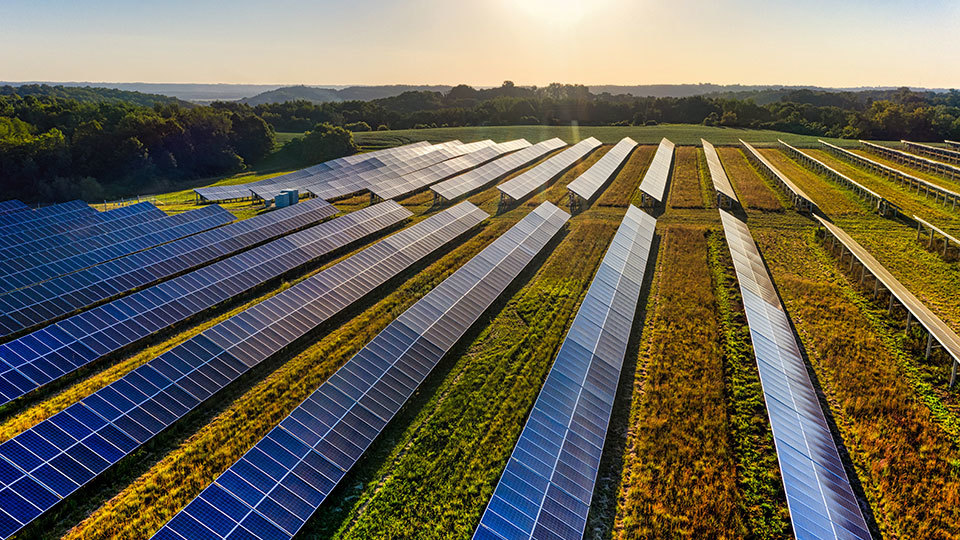
According to Wan Gang, the Chinese government attaches great importance to the adjustment of the energy structure. China has issued a series of policies in wind power, solar energy and other aspects. While strengthening basic research and enhancing industrial development, it has also established the world's largest wind storage and transmission demonstration project., Turn intermittent into continuous power generation. In 2015, China's cumulative wind power installed capacity of 129GW, photovoltaic cumulative installed capacity of 43GW, wind power and photovoltaic power generation of 222.5TWh, these are ranked first in the world. However, according to China's commitment at the Paris Summit, that is to say, non-fossil energy will account for 20% of the total energy by 2030, in order to achieve this goal, we still need to double these "world firsts". This is our challenge and opportunity. Wan Gang estimates that with 500000 electric vehicles in operation in China, the electricity used is less than 3% of the total wind and light power generation. In Wan Gang's view, the change of energy structure provides a guarantee for the development of China's automobile and the supply of automobile energy.
Judging from the changes in automobile energy consumption regulations in various countries in the world, energy consumption is rapidly decreasing. According to the requirements of the Chinese government, it will reach between 4.5L and 5L in 2020, and the new energy will reach below 4.5L. The amount that China needs to decline every year is still quite large compared with other countries in the world. At the same time, the implementation of Euro 6 emissions, Beijing is now Beijing 6 emissions, there is still a gap. China's auto industry still has to make great efforts in terms of energy consumption and emissions.
In the testing phase, Europe has changed from static testing and dynamic testing to high dynamic testing, and Japan's new testing conditions have increased from 12 accelerations and 12 decelerations to 26 accelerations and 26 decelerations. The Chinese government has also commissioned the China Automotive Technology Center to study and test the corresponding evolution. The test method has changed, especially the acceleration frequency increases, the oscillation intensity is large, and the working time is accelerated. New energy vehicles use motor drive, idle stop, automatic energy recovery, with the inherent advantages of energy saving and emission reduction. Regardless of energy, environmental protection, and the development of the automobile industry itself, they all point to the development path of new energy.
"Three vertical and three horizontal" China's development of new energy vehicle technology roadmap
When researching new energy vehicles more than ten years ago, pure electric, hybrid, and fuel cells were made into a plan, and key technologies and key assemblies, as well as key vehicle power systems, were determined for future development. We call the power system the main core technology composed of battery and management system, motor and drive system, multi-energy system, as well as hybrid engine and fuel cell engine. These key technologies have been arranged in a key technology on the three technical routes, which is what we call the "three vertical and three horizontal" arrangement.
From now on, hybrid power is developing from heavy hybrid in the past to plug-in and extended range, and generators will become power generation systems. Fuel cells have also appeared in two directions. One uses fuel cells as the main power, and the other uses fuel cells as an extended-range electric-electric hybrid power source. These three routes eventually become a motor-driven, power generation and storage system. The development of the technical route can concentrate the greatest strength to conquer the most critical technology, as the government should also strengthen the infrastructure, scientific research incentives, standard testing, laws and regulations to promote the application and so on.
Under such a system, the most important thing is basic research. The most important thing for electric vehicles is the power battery. In terms of scientific research, starting from the foundation, great efforts have been made to study the exchange mechanism of exchange membrane, the application of nanotechnology, the failure principle of the whole battery and the distribution of temperature field. The battery group technology and control technology have also been invested. It is these investments that have supported the development of power batteries in China. In 2015, compared with 2011, the unit energy density of batteries doubled. At the same time, manufacturing costs are reduced by 50%. In the future, we will strengthen the research on basic technology, constantly refine scientific problems in the process of development, find out scientific solutions, and solve common key technical problems.
Wan Gang proposed that in the next five years, efforts should be made to double the unit energy density of batteries and reduce manufacturing costs by another 50%. If the gas is above 300 yuan and the cost is reduced to less than one yuan, new energy vehicles will have stronger market competitiveness.
Drive motor, according to different stages to overcome different key technologies. For example, start-stop generators are now basically invested as a series. Hybrid power generators, especially on buses, have been well promoted. In particular, the recent development of dual-motor drives is closer to people's needs. The biggest feature of electric drive is that it has the maximum torque at zero speed, which is good for starting acceleration, but there are certain difficulties for secondary acceleration. Therefore, some companies have developed a dual-motor direct drive system, which has changed regardless of low speed and high torque, or secondary acceleration.
Wan Gang said unabashedly: "We still have shortcomings in the basic components of electric drives, such as power electronic devices, electromagnetic interference research, protection and safety, etc., and we must continue to strengthen them. This is what we will do during the 13th Five-Year Plan. Important work."
Do you need an engine in the era of electric cars?
Wan Gang believes that we not only need, but also to strengthen research in this area. Small, lightweight, and electronic will become the future of engines. For a long time, we still need special programs and special engines. We should make greater efforts in this regard. By reducing the displacement and size of the engine through, for example, hybrid power and turbocharging, this increases the layout space for the motor, and plays a greater role in the long distance. The cooperation between the engine and the motor is a very important form. The one that increases the range is a generator. How can this generator keep up with the reaction speed of the battery? This requires making the power smoother. After discussion by experts, clean, efficient, small and light will be the trend of engines.
Under such circumstances, Chinese enterprises have also developed plug-in hybrid power. The minimum requirement is 50 kilometers. Most Chinese automobile industries have used 70 kilometers or 75 kilometers. This is because we have observed more than 4000 electric vehicles for many years and concluded that about 75% of the vehicles travel below 50 kilometers and 90% of the vehicles travel below 75 kilometers. If it can be charged every day, more than 90% of plug-in models can use pure electric vehicles to achieve zero emissions in urban areas. This is the direction we will develop in the future.
Some good products have also emerged in Chinese brand cars, such as new energy vehicles from BAIC, BYD and Jianghuai, which are now more and more popular with consumers. The main reason is that it has a great advantage in cost performance. Of course, we have to work hard on high-end models.
Fuel cells are also entering the market. Compared with pure electric vehicles, fuel cells may have a longer path to marketization and have to wait more. Since the development of the first fuel cell in 2003, it has been conducting continuous research, first organized and developed by universities, and gradually entered the enterprise. Last year, SAIC completed the test run of fuel cell vehicles in China from south to north, from low to high, to the Qinghai-Tibet Plateau. Fuel cell vehicles are also gradually entering the market. At present, plug-in hybrid electric vehicles still have some emissions. In the future, fuel cells can be used to make up for shortcomings. We have integrated these technologies in a development direction, so that the investment in innovation can be more concentrated and more efficient.
When talking about the safety of electric vehicles, Wan Gang believes that safety is the most critical factor in the development of electric vehicles, and great efforts should be made in this regard. In terms of battery safety, the safety of the entire group, the safety of the layout, and the safety of the electric vehicle must be ensured in case of accidents. In addition, security in the Internet era should be the latest technology, that is, real-time control of the whole process. All bus yards have full-time full control, that is to say, during the operation of all buses, every battery is monitored, and if it overheats, it will automatically alarm, so as to truly ensure safety. Only in this way can we ensure the safety of car driving height in the new era.
Another development is the integration of electric vehicles, smart grids, and vehicle networks. Electric vehicles are not only used as energy storage terminals, but can even blend with each other in the energy Internet, vehicle networking, and information interconnection. This provides a better supply for new business models. For example, time-sharing rental, you can know what kind of car you can rent when you go out, and you can also find electric cars in real time, including charging locations. These are also the "13th Five-Year Plan" to conduct comprehensive research, and have gradually entered the integrated transportation system.
Support the internationalization of new energy vehicle development
From the growth of the output of new energy vehicles in China, we can see that the development of new energy vehicles adopts the mode of bus operation and then gradually enters the mode of family operation. There were less than 5000 new energy vehicles in 2011 and only 85000 in 2014. At that time, it was difficult to reach the target of 500000 vehicles. But last year it reached more than 370000. But here is one thing to tell us that the promotion of new energy vehicles is not only a matter of research and development, but also the support of the whole society. For new energy vehicles, the cancellation of lottery, the cancellation of traffic restrictions, the guarantee of priority parking, the ability to give policy force, comprehensive innovation, can truly enable the development of the new energy vehicle industry.
At the end of 2015, the global production of electric vehicles exceeded 1.45 million. From 2008 to 2014, the 16 member states of EVIincreased their investment in new energy vehicles. "I had the privilege of participating in the joint action plan of the Energy Mission at this year's Paris Climate Summit, and we will work with more than 20 countries to double our investment in clean energy over the next five years. So this will also be a focus of research and development in the energy mission as we electric vehicles, new energy vehicles." Wan Gang said.
At the same time, China has carried out international cooperation in the research and development of new energy vehicles, established China and Germany electric vehicle research centers, and also has the clean car alliance between China and the United States. The biggest feature is the so-called "2 2" model, in which the combination of industry, education and research between China and foreign countries promotes basic research and policy research.
"I am very glad to see that Chinese automobile enterprises and international automobile enterprises are merging. Last year, I spent some time driving the car jointly developed by Daimler Benz and BYD. Such jointly developed cars have also received all the preferential policies. We have repeatedly said that China's new energy vehicles are open and will be treated equally and equally in the Chinese market, from this perspective, we support the internationalization of new energy vehicle development." Wan Gang said.
As there are still great challenges for industrial development in the future, the research and development of core technologies still needs to be continuously deepened, and the development of batteries, motors, basic research, core technologies, and common technologies should continue to be strengthened. Vehicle capabilities, integration capabilities, especially safety, also require us to use new technologies and new forms to improve it.
The demand for the new energy automobile industry and market is very strong. It is necessary to firmly grasp the development direction of automobile electrification, lightweight and intelligence, and constantly innovate the business model of the automobile market. Electric vehicle is a promising sunrise industry with brilliant future in China, an industry bearing responsibility and mission, and the focus of scientific and technological innovation in the future.
Latest developments
Address: Floor 10, 18, 19 and 20, East Building, Building 1, Shun Tai Square, 2000 Shun Hua Road, High-tech Zone, Jinan City


