

Huaneng Design Institute
Design consulting EPC general contracting project supervision and other whole process professional service institutions
Power Internet of Things is coming, which investment opportunities need attention?
The Internet of Things will change the future of electricity.
According to the "Energy Production and Consumption Revolution Strategy (2016-2030)", by 2020, clean energy will become the main energy increment, with non-fossil energy accounting for 15%; by 2030, non-fossil energy will account for about 20% of total energy consumption.
Changes in the energy structure will have a profound impact on the grid. Qiao Yicai, senior vice president of Schneider Electric China and head of the energy division, said in an exclusive interview with a reporter from 21st Century Business Herald that the future power world will be more low-carbon, digital, and decentralized. The entire ecology of electric energy will also become very complex, requiring interconnection, with a large number of computing capabilities and predictive capabilities, and balancing changes in the power grid.
The application of the Internet of Things in the power grid also brings challenges to the power grid enterprises. The open Internet of things will make the operation of a single subject more and more difficult to sustain.
How big the power Internet of Things market is, Qiao Yi said it is difficult to estimate. However, there is no doubt that there are huge investment opportunities. Whether it is the $100 billion smart grid market or the microgrid market, there is a large demand for interconnection products, edge control products, and software products.
Single-subject operation is unsustainable.
21st Century: What impact will the future development of renewable energy have on the power grid?
Qiao Yicai: According to the national strategy, the proportion of non-fossil energy in primary energy will increase to about 20% in 2030. Analysts predict that by 2030, the renewable energy industry will account for as much as 50% of new productivity, which means that new investment in the energy sector in the future will basically be based on new energy.
Changes in the sources of energy production will bring very profound changes to the entire power grid. In the past, from power plant centralized power generation, transmission to end-user power consumption is a one-way flow process, relatively simple, the whole power supply process is continuous. However, this way of producing and transporting energy also brings some problems that are not conducive to sustainable development, such as the current haze and the rise of the earth's temperature, and fossil energy is limited.
At present, new energy is mainly solar energy and wind energy, and the proportion of other new energy is relatively small. The intermittent nature of new energy power generation has had a relatively large impact on the entire grid architecture model. In the future, with the increase in the use of renewable energy, the entire grid will be required to be more flexible and intelligent.
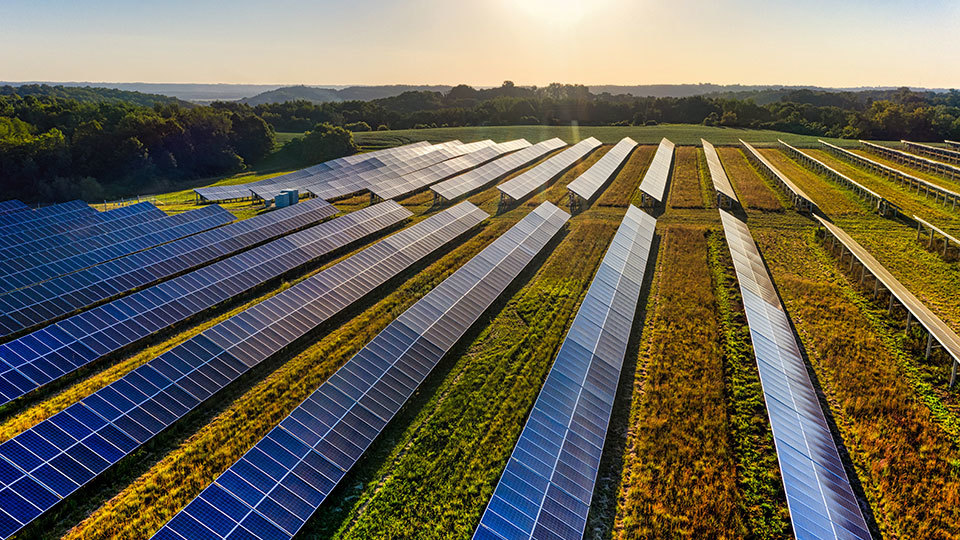
At the same time, the change on the demand side is also relatively large. Due to the development of renewable energy, many users can consider energy self-sufficiency. According to a 2015 report from Accenture, 57% of consumers consider being self-sufficient in their use of electricity. At present, many factories in Jiangsu have laid solar energy on the roof, which will be a very strong market demand.
But this kind of market demand will lead to the demand side also become more complex. When solar power is insufficient, go to the grid to buy electricity; When solar power is sufficient, electricity should be sold to the grid. In some periods, there are situations where the power grid and solar energy supply power for a long time at the same time, so when can we switch from solar power to commercial power and when can we switch from commercial power to solar power?
In addition, if you really want to be fully self-sufficient in energy, you must configure some energy storage equipment. When renewable energy generation is sufficient, store the electricity and release it when it needs to be sold.
Generally speaking, the entire ecology of electric energy will become very complex, requiring interconnection, with a large number of computing capabilities and predictive capabilities to balance all these changes.
"21st Century": in view of the changes brought about by the future energy trend to the power grid, that is, the power grid will gradually become an important performance situation of the Internet of things, how should power grid enterprises deal with it?
Qiao Yicai: The Internet of Things is increasingly used in the power grid, which will attract more operators to enter this industry, especially the country has also liberalized the electricity sales side. The traditional power grid is asset-heavy and unidirectional, but the Internet of Things of the power grid will attract many non-traditional power operators to enter the field of power grid. They also hope to obtain better profits through more advanced Internet of Things technology, more advanced control, and more effective operations.
For the power grid, one of the biggest challenges is that the Internet of things must be an open environment and an open network, and it will be more and more difficult to operate as a single subject in the future. As an existing power grid operator, it is necessary to quickly deploy IoT solutions, access intelligent equipment, intelligently transform existing equipment, deploy local and remote control, and deploy software on a large scale.
At the same time, all this must be balanced with the country's demand for renewable energy. Renewable energy consumption is also a major challenge for the grid. For example, Germany is a country where solar deployment is very common, and there is a surplus of electricity generated by solar energy at noon every day. So Germany had to send electricity to its neighbors, asking them to store solar power in ways such as pumped storage. Therefore, the contradiction between the continuity of power supply and the consumption of renewable energy may also be a relatively big challenge faced by power grid companies. Of course, other challenges include retrofitting legacy power grids and legacy software systems.
There are three major opportunities for power networking
21st Century: What opportunities will these shifts in the grid bring to Schneider Electric?
Qiao Yicai: Schneider Electric's opportunities have three main levels: interconnected products, edge control, applications, analysis and services.
In the past, electricity was a one-way flow, and products did not need to interact with the grid, just accept it, without giving back any information. Now and in the future, the entire power grid will become an intelligent system from the power generation side to the power consumption side, with a large amount of energy flowing in both directions. The premise of the two-way flow of energy is the two-way flow of information, so the so-called intelligent products will face the opportunity of complete upgrading in the future.
The power grid is slowly becoming an important manifestation of the Internet of Things, which requires us to have a lot of communication equipment to collect information, do certain processing and then upload it to software. At present, many companies engaged in software business in the market are very active in the energy field, whether it is local software or cloud software, which is also an opportunity for Schneider Electric.
"21st Century": If an investor wants to consult, in view of the future changes in the power grid industry, which more specific or subdivided areas can be invested in the next three to five years, how do you answer?
Qiao Yicai: In terms of products, smart products, the combination of automatic control and traditional products, and software products are all major investment directions.
From a market perspective, investors can focus on the smart grid market. As I said earlier, the transmission mode of the power grid will change from one-way to two-way. At the same time, people have higher and higher requirements for the reliability and continuity of power supply. The power grid must become more intelligent, and the construction of the Internet of things will become inevitable. In the process of building the Internet of Things, it will naturally stimulate market demand.
Investors can also focus on the microgrid sector. Some users who pursue self-sufficiency in power supply are also generating electricity while using electricity. They will have to build their own small network, which is the microgrid (microenergy grid). The construction of such microgrids and their interaction with the grid will generate a large demand for interconnection products, edge control products, and software products.
The construction of all these Internet of Things will generate a lot of data. The analysis and processing of data is also a business opportunity that investors can pay attention.
Latest developments
Address: Floor 10, 18, 19 and 20, East Building, Building 1, Shun Tai Square, 2000 Shun Hua Road, High-tech Zone, Jinan City


