



Huaneng Design Institute
Design consulting EPC general contracting project supervision and other whole process professional service institutions

Hubei Xiangyang accelerates the layout of the new energy storage battery track.
2024-07-15
On December 12, the Information Office of the People's Government of Xiangyang City, Hubei Province held a press conference to introduce the development of the local energy storage battery industry. It is reported that in recent years, the city has vigorously developed the new energy and new materials industry with a focus on energy storage batteries, with an increasingly solid industrial foundation and gradually improving supply chains.
Xiangyang is an important old industrial base in China and one of the top ten automobile cities in the country. On December 3, 2023, the Xiangyang Municipal Government Office issued the "Three-Year Action Plan for Further Accelerating the Development of the New Energy Energy Storage Battery Industry (2023-2025)", aiming to achieve a scale of 100 billion yuan for the new energy energy storage battery industry by 2025, gradually establishing an important energy storage battery industry base in central China.
Currently, Xiangyang's new energy energy storage battery industry is accelerating the formation of a dual development pattern focusing on lithium iron phosphate batteries and all-vanadium flow batteries. The city has three national-level development zones, eight provincial-level development zones, and 21 municipal-level characteristic industrial parks, along with six provincially recognized compliant chemical parks, which can accommodate various upstream and downstream enterprises in the energy storage battery industry chain.
Tan Shanshan, a member of the Xiangyang Municipal Bureau of Commerce Party Committee and Deputy Director, introduced that the city will focus on developing two sub-industrial systems: energy storage lithium batteries and vanadium flow batteries. In the field of energy storage lithium batteries, it will focus on developing cathode materials such as lithium iron phosphate and lithium manganese phosphate, accelerate the layout of anode materials such as graphite and silicon oxide, while simultaneously enhancing key materials like electrolytes, membranes, and current collectors to streamline the entire phosphorus-based industrial chain, increase product added value, and enhance product competitiveness. In the field of vanadium flow batteries, it will focus on electrolyte preparation and vanadium catalyst recovery processes to connect manufacturing, application, and supply ends, strengthen and promote commercial applications of vanadium energy storage batteries, and establish a complete vanadium flow battery industrial chain.
He Gao, a member of the Xiangyang Municipal Economic and Information Technology Bureau Party Committee and Deputy Director, stated that in the future, Xiangyang will develop upstream industries to strengthen new energy energy storage battery materials and key components; precisely layout midstream energy storage battery system integration and manufacturing; expand downstream applications in the energy storage battery market; and extend development into comprehensive battery utilization industries to promote applications of new energy energy storage batteries in smart cities, rural revitalization, smart transportation, new infrastructure, and various other scenarios.

2024-07-15
On November 27, 2020, the National Development and Reform Commission and the National Energy Administration designated Shandong as the only comprehensive reform pilot province for the national electricity market construction. Over the past three years, State Grid Shandong Electric Power Company has fully implemented the decisions and deployments of the Central Committee of the Communist Party regarding electricity market reform, resolutely fulfilling the relevant work requirements of the Party Leadership Group of State Grid Corporation. They have tackled core issues in market construction such as the relaxation of priority power consumption plans, new energy market transactions, multi-level market connections, and price formation mechanisms. They developed and applied the '1+1+2' scheme system for Shandong's electricity market comprehensive reform pilot. On June 17, 2024, the Shandong electricity spot market officially began operation, and State Grid Shandong Electric Power successfully completed its comprehensive reform pilot tasks.

2024-07-10
In June 2014, General Secretary Xi Jinping took charge of the overall situation of national security and development, insightfully grasping the trends in domestic and international energy development. He creatively proposed the new energy security strategy of "Four Revolutions, One Cooperation," guiding China's energy development to achieve historic achievements and transformations. As the second-largest power generation group in the world and the largest livelihood heating enterprise in the country, China Huaneng Group Co., Ltd. (hereinafter referred to as "China Huaneng") has adhered to the guidance of Xi Jinping's Thought on Socialism with Chinese Characteristics for a New Era over the past decade. It has deeply implemented the new energy security strategy of "Four Revolutions, One Cooperation," taking the responsibility of ensuring national energy security as its primary duty, accelerating the green and low-carbon transition as its development direction, and contributing to the construction of a new energy system and a new power system, demonstrating Huaneng's new responsibilities and actions in the construction of Chinese-style modernization.

2024-07-07
On July 4th, the Shandong Development and Reform Commission, the Shandong Energy Bureau, and six other provincial-level agencies jointly issued the "Action Plan for the High-Quality Development of the Photovoltaic Industry in Shandong Province."

New breakthrough! 1 hour of power generation ≈ the daily electricity consumption of 2500 households.
2024-07-05
On July 4th, the first domestically developed 15-megawatt heavy-duty gas turbine - "G15" - rolled off the assembly line in Deyang, Sichuan. This supports our country in accelerating the formation of an independent gas turbine system and optimizing the energy structure, marking a breakthrough in the field of heavy-duty gas turbines in China.
2024-07-04
Technological Innovation Driven: Technology Safeguards a New Chapter in Resource Survey
Li Sheng, China Institute of Water Resources and Hydropower Research
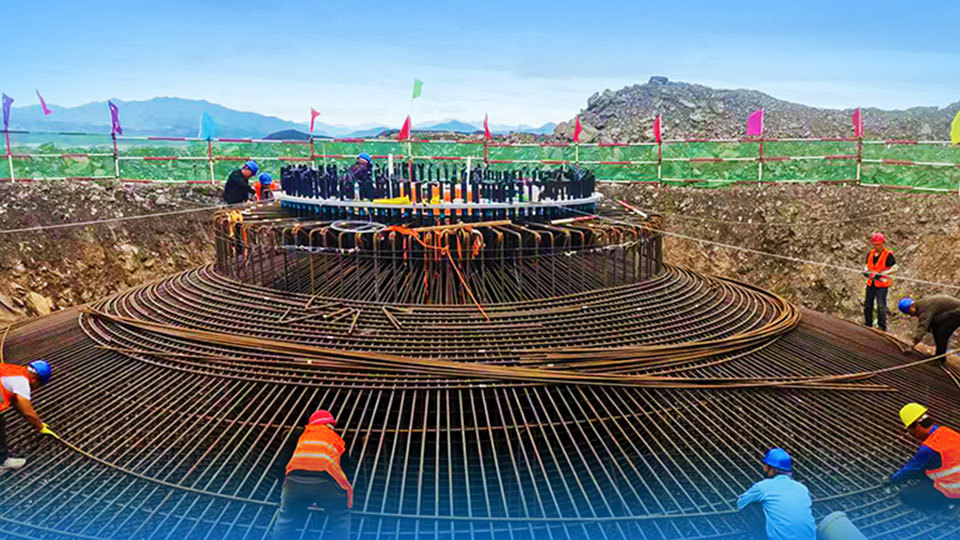
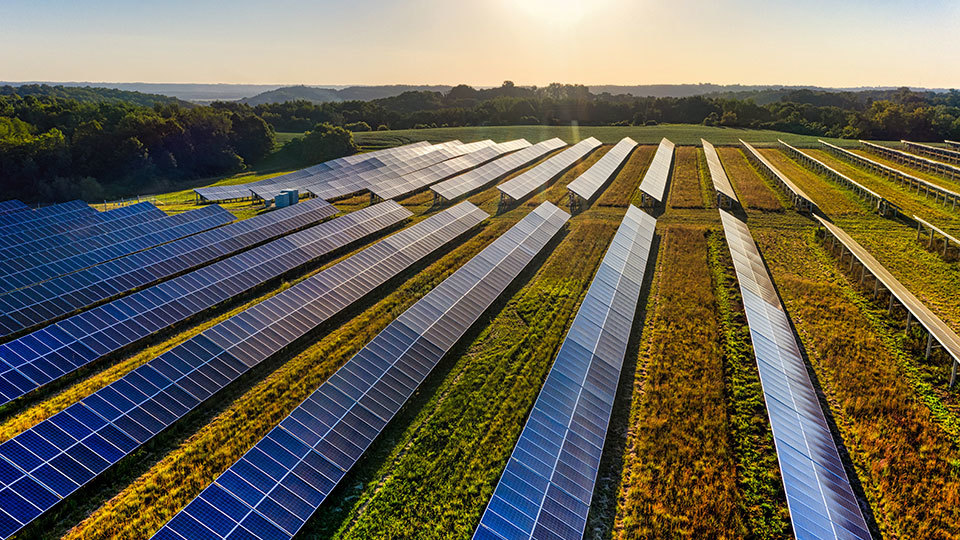
Wind power and photovoltaic power generation, as key forces in building a new energy system, are important supports for promoting the green and low-carbon transformation of energy, achieving carbon peak and carbon neutrality, and are also an inevitable choice for ensuring national energy security. Recently, six ministries including the National Development and Reform Commission, the National Energy Administration, the Ministry of Natural Resources, the Ministry of Ecology and Environment, the China Meteorological Administration, and the National Forestry and Grassland Administration jointly issued a notice on conducting pilot resource surveys for wind power and photovoltaic power generation (hereinafter referred to as "Notice"), proposing to carry out resource surveys for wind power and photovoltaic power generation. The specific tasks are interpreted from five aspects.
1. Unifying Technical Standards System, Clarifying Resource Survey Guidelines
As the foundation for industry development, resource surveys have been conducted four times nationwide over the past decade, providing an important work basis for industry development. The first four surveys mainly focused on wind energy resource characteristics, and the most recent survey was conducted over ten years ago. There has not yet been a systematic nationwide survey of photovoltaic power generation resources. With the leapfrog development of wind and photovoltaic power generation at scale, some provinces have conducted local resource surveys based on work needs. However, due to unclear standard systems and inconsistent technical routes, there are significant differences in survey results, lacking uniformity, authority, and clear guiding significance.
In response to the diversity of wind and solar resource characteristics, terrain features, and development utilization forms in China, closely combining with the latest trends in wind and solar technology development under new circumstances in the new era, the "Notice" clearly states that during the pilot preparation phase, a technical standard guideline for surveys will be organized. This will form a systematic and standardized standards system from aspects such as basic data requirements, resource assessment methods, assessable capacity evaluation methods, and survey result compilation. This ensures that each pilot area can conduct survey work according to regulations in a scientific manner while continuously improving the standards system based on pilot area work effectiveness to provide strong guidance and support for conducting nationwide surveys.
2. Building a Comprehensive Data Foundation to Strengthen Survey Result Support
The completeness and accuracy of basic data are fundamental to conducting resource surveys for wind power and photovoltaic power generation. The "Notice" clearly states that basic data collection should be completed during the pilot preparation phase. The basic data for surveys can be roughly divided into three categories: first is current development basic data, mainly including current development status, land use status, equipment conditions; second is meteorological basic data, mainly covering wind energy and solar energy resource measurement data; third is development factor data including terrain data, national land "three adjustments", forestry and grassland data, etc. Additionally, it is necessary to comprehensively sort out national and local policies and planning documents related to land use requirements for wind and solar development to clarify the boundaries of wind and solar development utilization.
Based on relevant basic data from various departments and control requirements, technical means will be used for data integration to identify, analyze, and extract the conditions for developable resources of wind power and photovoltaic power generation in various regions as well as construction conditions and land use conditions to clarify areas suitable for developing wind power and photovoltaic power generation.
3. Building a Resource Observation Network to Accurately Assess Resource Characteristics
Wind and solar resource observation data are fundamental for accurately assessing wind and solar resource conditions. Wind and solar resource assessment is the cornerstone of assessable capacity evaluation; it is one of the decisive factors ensuring the development utilization of wind farms and photovoltaic power stations. It also guides technological innovation in wind and solar resources development utilization as well as promotes industrial development.
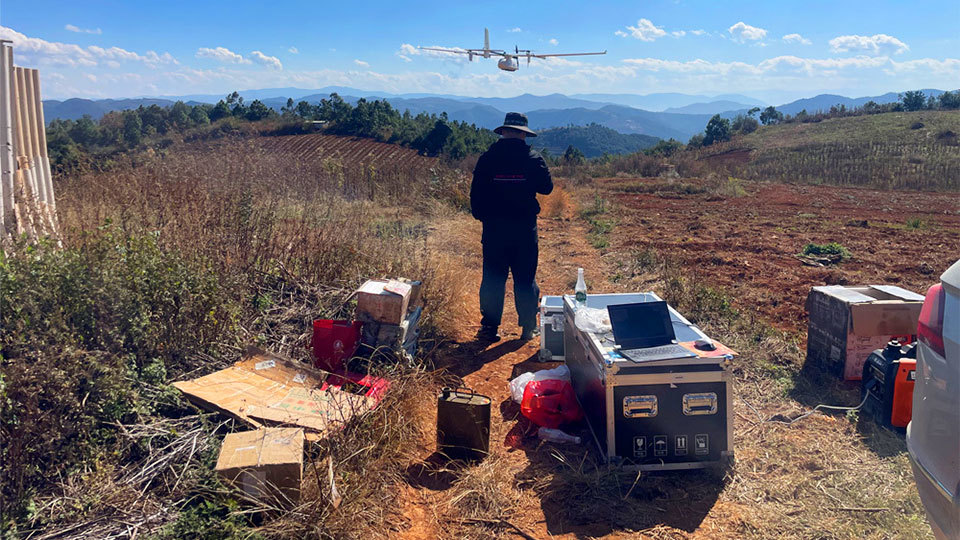
The "Notice" clearly states that during the pilot preparation phase, preliminary preparations for building a wind-solar resource observation network should be completed. Existing meteorological observation data along with measurement data from existing or under-construction stations should be fully utilized to construct regional resource observation networks as needed. Based on observation data, refined numerical simulations of wind-solar resources will be conducted through spatial distribution data analysis to set thresholds for assessable area resources clearly identifying areas suitable for development while scientifically assessing regional wind-solar resource conditions, temporal-spatial distribution characteristics, generation characteristics etc., promoting innovative developments in wind-solar technology as well as utilization methods providing solid data support for ensuring national energy supply security.
4. Innovating Survey Work Methods to Build an Intelligent Survey Work Platform
To ensure technical standardization and consistency in survey work, this survey will establish a unified work platform implementing unified work standards and processes. This platform integrates assessments of wind energy and solar energy resources while comprehensively considering factors such as terrain, geomorphology (submarine), geological hazards, land use categories, marine environment, development utilization technologies etc., fully utilizing advanced technologies such as big data, artificial intelligence, geographic information systems (GIS), satellite remote sensing etc., intelligently identifying suitable areas for arranging wind turbine units or photovoltaic arrays; integrating spatial elements of land use while connecting national policies with local policy documents regarding land use requirements intelligently delineating areas suitable for wind power generation and photovoltaic power generation. Through intelligent tools such as automatic layout planning constraints on dispersion degree equipment selection scale calculation etc., assessable capacity of wind power generation and photovoltaic power generation will be calculated achieving intelligent information-based efficient survey work.
5. Hierarchical Assessment of Developable Capacity to Assist Accurate Guidance from Survey Results
According to the deployment in the "Notice", this survey requires comprehensive mapping of theoretical developable capacity and technical developable capacity across all pilot areas according to unified technical standards while conducting hierarchical assessments on technical developable capacity. The hierarchical classification of technical developable capacity is divided based on dimensions such as resource conditions or generating capacity distinguishing differences between varying resource levels within the same type of energy source while clarifying differences in development utilization methods among different resource types within the same site area. Through hierarchical classification of technical developable capacity from an economic perspective it helps clarify priorities in development utilization; from a comprehensive utilization perspective it helps clarify methods of development utilization; from a planning guidance perspective it helps clarify deployment layout timing effectively guiding orderly scientific future developments in regional wind power generation and photovoltaic power generation.
Address: Floor 10, 18, 19 and 20, East Building, Building 1, Shun Tai Square, 2000 Shun Hua Road, High-tech Zone, Jinan City


Business License