2024-06-26
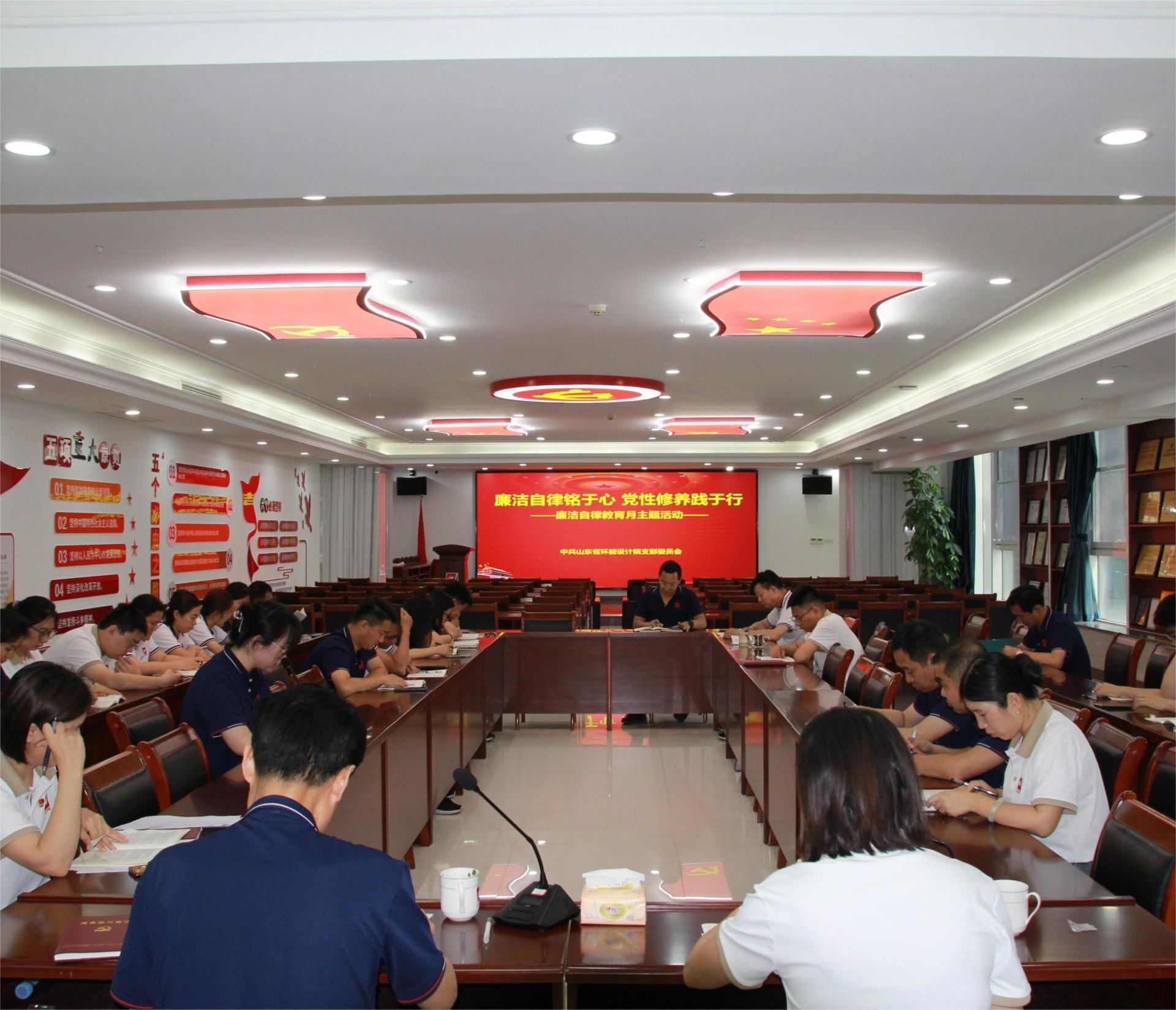
In order to deeply implement the requirements of the higher-level party committee regarding the activities of the Integrity and Self-Discipline Education Month, further strengthen the party style and clean government construction of the enterprise party branch, and enhance the integrity and self-discipline awareness of party members and cadres, the Shandong Huaneng Party Branch organized a profound and effective theme education meeting on integrity and self-discipline on June 24, 2024, and conducted an in-depth study of the "Regulations on Disciplinary Actions of the Communist Party of China." This activity aims to reinforce the discipline awareness of party members and cadres and create a clean and upright environment for corporate development.
At the beginning of the meeting, Deputy Secretary Wang Youmei conveyed the implementation plan for the 2024 "Mobile Talent Party Committee Integrity and Self-Discipline Education Month" from the higher-level party committee. Secretary Wang pointed out that integrity is the lifeline of an enterprise and a bottom line that party members and cadres must adhere to. Only by maintaining a clean and upright style can trust and support from employees be won, thus promoting sustainable and healthy development of the enterprise.
Subsequently, Liu Xingxing, leader of the design company party group, led all party members in a serious study of the "Regulations on Disciplinary Actions of the Communist Party of China." Through a detailed interpretation of the regulations, party members deeply recognized the seriousness and authority of party discipline, clarifying which behaviors are untouchable red lines. During the learning process, party members shared their insights based on their own work experiences. Everyone expressed that they would take this learning opportunity to further strengthen their self-cultivation, enhance their integrity and self-discipline awareness, strictly demand themselves in their work, resolutely resist various corrupt behaviors, and contribute to the development of the enterprise.
Finally, Party Branch Secretary Zhang Fuquan summarized this activity and proposed requirements for future work. The Secretary emphasized that integrity and self-discipline education is a long-term task. The party branch will continue to strengthen education and supervision of party members and cadres, continuously improve the risk prevention mechanism for clean governance, ensuring that all work within the enterprise operates on a clean track. At the same time, all party members are required to transform their learning outcomes into practical actions, play a model role in their work, and create a good political ecology for corporate development. Through this activity, the party members and cadres of Shandong Huaneng Party Branch have further enhanced their awareness of integrity and self-discipline and improved their ability to resist corruption. It is believed that under the strong leadership of the party branch, all party members and cadres will inject strong positive energy into the development of the enterprise with more resolute beliefs and more pragmatic styles.
2024-06-26
On June 20, at the press conference series themed "Promoting High-Quality Development," Li Chuangjun, Director of the New Energy and Renewable Energy Department of the National Energy Administration, stated that currently, the photovoltaic industry in China is indeed very competitive. To guide the healthy development of the industry, we will take the following measures: First, we need to consolidate the new installed capacity market for domestic photovoltaic power generation. A stable domestic market is the "foundation" and "ballast" for the continuous and healthy development of China's photovoltaic industry. We will adhere to a balanced development of centralized and distributed systems. On one hand, we will strengthen the construction of large-scale wind and photovoltaic bases focused on desert, gobi, and barren areas; on the other hand, we will steadily implement the "Thousand Households Sunlight Action" to vigorously develop distributed photovoltaic power generation. At the same time, we will accelerate the construction of a new energy infrastructure network to improve the grid's ability to accept, allocate, and regulate new energy generation, including photovoltaics. Secondly, we will enhance multi-department coordination to standardize the order of the photovoltaic power generation industry. We will work with relevant departments to organize industry associations to timely release information on industry scale, capacity utilization rates, and market demand to reasonably guide upstream capacity construction and release in photovoltaics, avoiding redundant low-end capacity construction and striving to create a good market environment. Finally, we will continue to enhance photovoltaic technology innovation capabilities. We will fully leverage the leading role of national energy R&D innovation platforms to direct resources towards supporting research and innovation in advanced technologies and capacities, promote key technological breakthroughs in efficient solar cells, and advance upgrades in key basic materials technology. We will work with relevant departments to continuously strengthen the construction of a standard system for the photovoltaic industry, enhance standard innovation leadership, and promote healthy industrial development.
2024-06-26
On June 21, General Secretary of the Communist Party of China, President, and Chairman of the Central Military Commission Xi Jinping recently inspected Ningxia. He emphasized the need to use the construction of the ecological protection and high-quality development pilot zone in the Yellow River basin as a guide to comprehensively promote high-quality development and high-level protection, deepen reforms, expand openness, advance new urbanization and rural revitalization, and foster ethnic unity and common prosperity. The goal is to accelerate the construction of a beautiful new Ningxia that is economically prosperous, ethnically united, environmentally beautiful, and where people are affluent, thus striving to write a chapter of Chinese-style modernization for Ningxia. Xi pointed out that Ningxia has a unique geographical environment and resource endowment, and should pursue a path of specialized and differentiated industrial development to build a modern industrial system that reflects Ningxia's advantages and has strong competitiveness. The modern coal chemical industry and new materials industry in Ningxia, as well as clean energy industries such as wind power, photovoltaics, and hydrogen energy, along with specialty industries like wine and goji berries, should be cultivated meticulously for sustainable development. There should be a deep integration of culture and tourism, actively developing specialty tourism and all-region tourism. Strengthening the integration of technological innovation with industrial innovation is essential, increasing the application of scientific research achievements to promote the transformation and upgrading of traditional industries, nurturing strategic emerging industries, and developing new types of productive forces suited to local conditions.
The original text states: On June 19, after concluding his inspection in Qinghai, Xi Jinping arrived in Ningxia. In the afternoon of that day, he visited Yinchuan City accompanied by Liang Yanshun, Secretary of the Ningxia Hui Autonomous Region Party Committee, and Zhang Yuping, Chairman of the Autonomous Region Government. The Changcheng Garden Community in Yinchuan's Jinfeng District is a large community with multiple ethnic groups. Xi first visited the community's Party-Mass Service Center, entering the convenience service hall, community health station, and love supermarket to listen to an introduction about community work and learn about how the grassroots Party organization plays its role in neighborhood activities and providing convenient services. He then went to the community activity room where he showed great interest in watching residents create paper-cut art and rehearse dances while warmly interacting with everyone, encouraging retired residents to enjoy their old age while also contributing positively.
Xi emphasized that community Party organizations are the nerve endings connecting the Party with grassroots masses and must play a leading role in communities. When community Party organizations are well-established and strong, community work will have a backbone. It is essential to adhere to Party building leadership closely around solving urgent issues faced by residents while ensuring that all services for the public are thorough and effective. Xi visited resident Zhao Shoucheng's home where he sat down with the family to chat about their employment, income, medical insurance reimbursements, children's education, etc., praising their happy life and encouraging children to develop comprehensively in morality, intelligence, physical fitness, aesthetics, and labor.
Zhao told the General Secretary that local Party committees and governments care deeply about community construction, especially in renovating old neighborhoods and enriching residents' cultural lives. People from various ethnic groups live harmoniously together in the community and enjoy comfortable lives. Xi stressed that our Party serves the people wholeheartedly; every household is my concern. I hope you can improve your family life so that your days become more prosperous.
In the evening, the community square was lively as residents gathered around when they saw the General Secretary arrive, applauding warmly in welcome. Xi kindly addressed everyone saying he was very happy to visit Ningxia again after four years to see all ethnic cadres and masses! The Chinese nation is one big family; people from all ethnic groups should hold together tightly like pomegranate seeds. We must continuously strengthen our awareness of a shared Chinese national community to connect people's hearts closely together while gathering strength from all sides to jointly promote Chinese-style modernization and contribute to the great rejuvenation of the Chinese nation.
On the morning of June 20th, Xi listened to reports on work from the Ningxia Hui Autonomous Region Party Committee and government while affirming their achievements. He pointed out that Ningxia's unique geographical environment and resource endowment require it to pursue specialized industrial development paths while building a modern industrial system reflecting its advantages with strong competitiveness. The modern coal chemical industry and new materials industry in Ningxia along with clean energy industries such as wind power, photovoltaics, hydrogen energy as well as specialty industries like wine and goji berries should be cultivated meticulously for sustainable development.
There should be a deep integration of culture with tourism while actively developing specialty tourism across all regions. Strengthening technological innovation alongside industrial innovation is crucial; increasing efforts for applying scientific research achievements will promote traditional industry transformation while nurturing strategic emerging industries tailored to local conditions.
Ningxia's northern Yellow River irrigation area, central arid zone, and southern mountainous areas each have their characteristics; it is important to accurately assess each area's industrial development foundation, resource environmental capacity, openness potential while enhancing overall planning and industrial cooperation to promote a development pattern where mountains support each other alongside urban-rural integration.
Xi emphasized that Ningxia should focus on deepening reforms in key areas while exploring locally distinctive reforms. It is necessary to improve foundational market economy systems actively integrating into national unified market construction while continuously advancing state-owned enterprise reforms seriously implementing policies promoting private economic development optimizing business environments while stimulating social investment vitality.
Combining internal with external openness is essential; actively participating in building the "Belt and Road" initiative along with constructing new land-sea corridors in western regions will deepen economic cooperation with Arab countries while enhancing inland openness levels. Protecting the ecological environment of the Yellow River along with Helan Mountain, Liupan Mountain, Luoshan Mountain serves as a baseline for planning reform development; it is crucial to deepen market-oriented resource environmental factor allocation reforms while improving mechanisms for realizing ecological product value alongside ecological protection compensation mechanisms implementing strictest water resource management systems.
Efforts must be made on tackling challenges posed by Yellow River bends while coordinating forest grassland wetland desert ecological protection restoration alongside comprehensive management of saline-alkali land ensuring that "the southern bank of the Great Wall" becomes increasingly beautiful.
Xi pointed out that it is necessary to strengthen inclusive foundational livelihood projects focusing on addressing urgent issues faced by people while solidly advancing common prosperity for all ethnic groups. Employment must be prioritized; solid work must be done for key groups such as college graduates migrant workers veterans etc. Actively promoting urban renewal while enhancing renovation efforts for old neighborhoods aligns with population flow trends promoting urban-rural integrated development facilitating integrated infrastructure public services between urban-rural areas.
Comprehensively advancing rural revitalization implementing actions for uplifting millions of immigrants building beautiful villages promoting changes in rural customs are essential steps toward consolidating expanding poverty alleviation achievements deepening targeted assistance social support firmly preventing large-scale return to poverty.
Ensuring safety production strengthening risk hazard investigation prevention measures effectively safeguarding people's lives property safety is paramount. Xi emphasized fully implementing national policies on ethnic work striving towards creating demonstration zones for strengthening awareness of a shared Chinese national community.
Legally governing ethnic affairs focusing on constructing interwoven social structures community environments continuously broadening practical paths for full integration among various ethnic groups is vital. Fully implementing theories policies regarding religious work under new era strengthening ideological political guidance over religious communities.
Xi pointed out that it is necessary to earnestly implement disciplinary education currently being conducted throughout the Party ensuring party members cadres seriously study party discipline regulations under premises of compliance working diligently innovatively proactively engaging in initiatives.
It is essential to uphold party character integrity discipline together improving mechanisms institutionalizing long-term effectiveness regarding style construction continuously deepening efforts against formalism reducing burdens on grassroots advancing integrated approaches preventing corruption fostering an environment conducive towards unity guiding social ethos.
Leaders from Yishui County, Linyi City, Shandong Province visited the company for交流考察.
2024-06-20
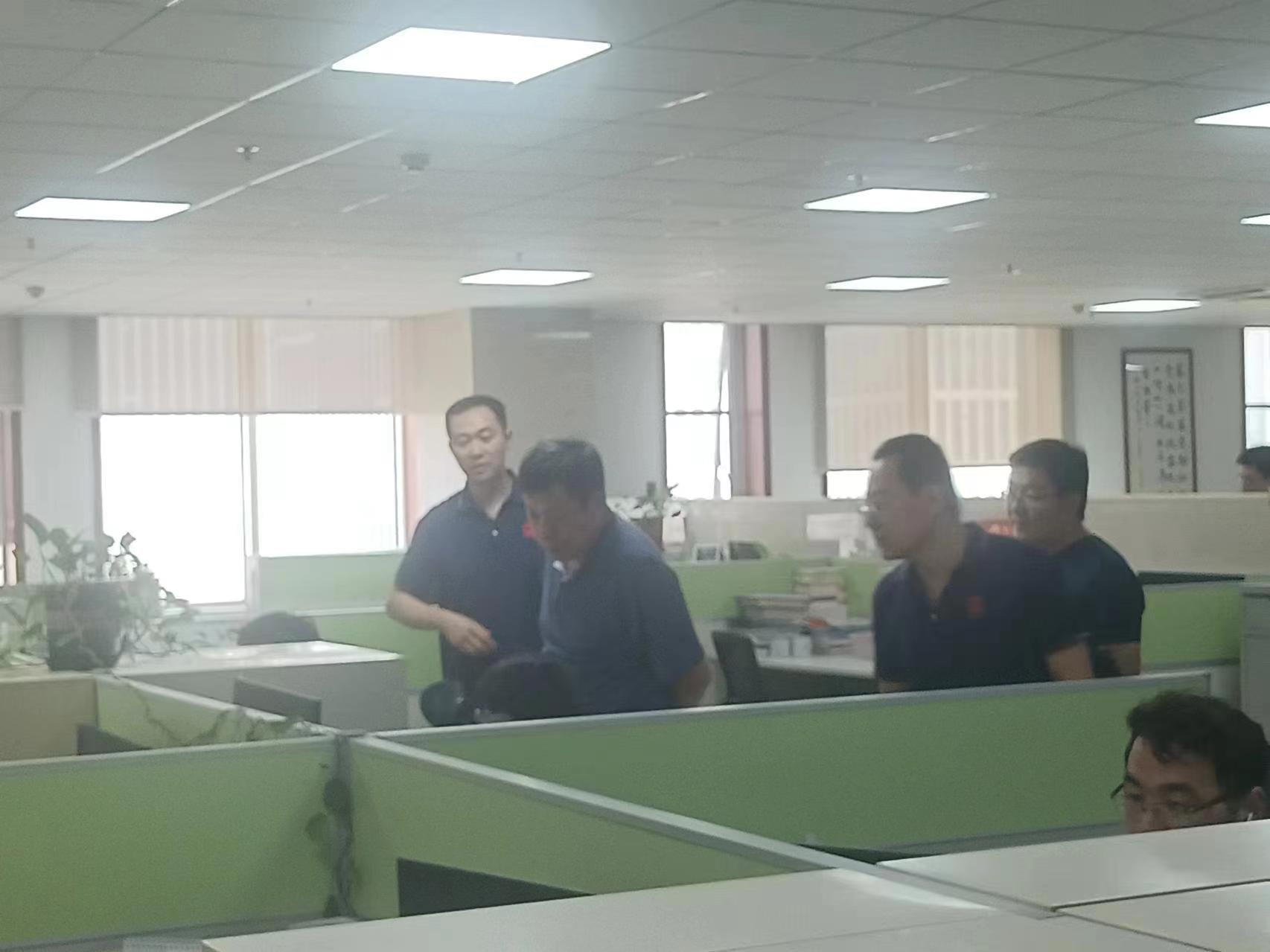
On June 15, 2024, a delegation of five leaders from Yishui County, Linyi City, Shandong Province visited the company for an inspection and exchange. Zhang Dan, the Deputy General Manager of Design II at Shandong Environmental Energy Design Institute Co., Ltd., accompanied the visit and participated in discussions. The leaders from Yishui County first toured the company's promotional area and office area, where Zhang Dan provided an introduction to relevant information. The Yishui County leaders expressed their recognition of the company's scale and situation. Subsequently, both parties held a discussion in the conference room on the tenth floor.
2024-06-19
In June 2014, General Secretary Xi Jinping creatively proposed the new energy security strategy of "Four Revolutions and One Cooperation." Over the past decade, the energy sector has deeply implemented this strategy, achieving historic accomplishments in energy development. Energy regulation, as an important component of China's energy governance system and modernization of governance capabilities, has played a significant role in ensuring energy security, supporting green transformation, promoting market construction, and enhancing people's well-being over the past ten years. Recently, six main responsible officials from the National Energy Administration wrote a signed article discussing the implementation of the new energy security strategy and the new practices in advancing energy regulation with Chinese characteristics.
Shandong Zhongneng Engineering Construction Co., Ltd. held a fire extinguishing drill.
2024-06-17
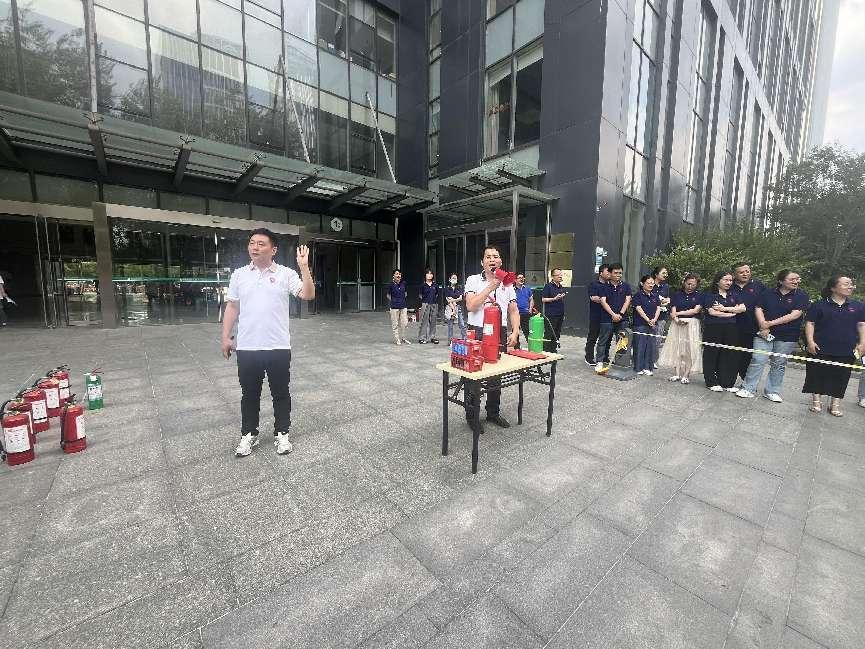
In order to enhance the ability of company employees to extinguish initial fires after a fire outbreak and to equip them with basic firefighting skills, Shandong Zhongneng Engineering Construction Co., Ltd. held a fire extinguishing drill on June 17 at 3:30 PM. The company's general manager, Wang Youmei, served as the overall commander of the drill. This drill focused on extinguishing initial fires, with the scenario set in the early stages of a fire. Before the drill, the instructor Zhang Lei provided participants with hazard identification and safety technical briefings, explaining relevant knowledge about fire extinguishers and precautions. As the drill commenced, participants reported the fire situation, and on-site commander Mr. Feng ordered "Drill Start." Participants used handheld fire extinguishers to put out the fire. After extinguishing the fire, Mr. Feng reviewed the key points and precautions from the drill.
2024-06-17
Recently, the Shandong Provincial Department of Industry and Information Technology issued a notice on the announcement of the 2024 specialized, refined, distinctive, and innovative small and medium-sized enterprises. Our institute has successfully been selected due to its solid technical strength and strong development potential. 'Specialized, refined, distinctive, and innovative' is a major initiative implemented by the state to promote the specialized, refined, distinctive, and innovative development of small and medium-sized enterprises, enhance independent innovation and core competitiveness, and improve the quality and level of development of small and medium-sized enterprises. Specialized, refined, distinctive, and innovative small and medium-sized enterprises refer to those that are specialized, refined, distinctive, and have outstanding innovation capabilities. They focus long-term on a certain link or product in the industrial chain and are key players in the supply chain.
Implementation plan for establishing a carbon footprint management system
2024-06-13
In order to thoroughly implement the "Opinions of the Central Committee of the Communist Party of China and the State Council on Fully and Accurately Implementing the New Development Concept and Effectively Carrying Out Carbon Peak and Carbon Neutrality Work" and the "Opinions of the Central Committee of the Communist Party of China and the State Council on Comprehensively Promoting the Construction of a Beautiful China," as well as to implement the State Council's "Action Plan for Carbon Peak Before 2030," this plan is formulated to accelerate the establishment of a carbon footprint management system, form a green low-carbon supply chain and lifestyle, promote the development of new productive forces, and assist in achieving carbon peak and carbon neutrality goals.
Main Goals: By 2027, a preliminary carbon footprint management system will be established. National product carbon footprint accounting general standards that align with international standards will be developed and published, along with approximately 100 key product carbon footprint accounting rules. A preliminary product carbon footprint factor database will be constructed, and a product carbon footprint labeling certification and grading management system will be initially established, with positive progress in international alignment of key product carbon footprint rules.
By 2030, the carbon footprint management system will be further improved with more diverse application scenarios. Approximately 200 key product carbon footprint accounting rules will be developed and published, with a comprehensive product carbon footprint factor database that has wide coverage, high data quality, and strong international influence. The product carbon footprint labeling certification and grading management system will be fully established, continuously optimizing and expanding the application environment for product carbon footprints. The rules for product carbon footprint accounting, factor database, and carbon labeling certification system will gradually align with international standards, participating substantively in the formulation of international rules for product carbon footprints.
Main Tasks: (1) Establishing and improving the carbon footprint management system by publishing product carbon footprint accounting general standards. Based on national conditions, localization work for internationally accepted product carbon footprint accounting methods and standards will be carried out. The national product carbon footprint accounting general standards will clarify boundaries, methods, publication formats, data quality requirements, traceability requirements, etc., unifying the preparation requirements for product carbon footprint accounting rule standards.
Publishing key product carbon footprint accounting rule standards. Focus on key products such as electricity, coal, natural gas, fuel oil, steel, electrolytic aluminum, cement, fertilizers, hydrogen, lime, glass, ethylene, synthetic ammonia, calcium carbide, methanol, lithium batteries, new energy vehicles, photovoltaics, and electronics to develop and publish accounting rule standards. Following the principle of trial implementation through group standards that gradually transition to industry or national standards, develop key product carbon footprint accounting rule standards.
Establishing a comprehensive product carbon footprint factor database. Relying on the national greenhouse gas emission factor database, focus on key areas such as basic energy sources, bulk commodities and raw materials, semi-finished products, and transportation to publish product carbon footprint factors and establish a national product carbon footprint factor database.
Establishing a product carbon labeling certification system. Researching and formulating management measures for product carbon labeling certification to clarify applicable scope, labeling styles, certification processes, management requirements, etc. Researching and formulating a catalog of certified products' carbon footprints and implementation rules.
Establishing a graded management system for product carbon footprints. Government departments will explore conducting graded assessments and management work for key industries and sub-sectors' products' carbon footprints. Enterprises are encouraged to evaluate their own and their supply chains' carbon footprints according to relevant standards and requirements to promote discovering decarbonization potential, optimizing supply chain management, and enhancing low-carbon competitiveness of products.
Exploring the establishment of a carbon footprint information disclosure system. Under the premise of ensuring data security and intellectual property rights protection, enterprises are encouraged to disclose their products' carbon footprint accounting results through environmental climate information disclosure or voluntary evaluation certifications in phases.
(2) Building a multi-stakeholder participation framework for carbon footprint work by strengthening policy support and collaboration. Promoting integration of product carbon footprint requirements into trade, finance, fiscal policies to form a collaborative policy force for promoting product carbon footprints. Encouraging inclusion of product carbon footprints in green low-carbon supply chain evaluations to leverage their positive role in promoting low-carbon technology applications among upstream and downstream enterprises in industrial chains.
Increasing financial support efforts. Encouraging financing entities to efficiently calculate products' carbon footprints accurately and timely; based on this calculation further assess financing project emissions to provide necessary information for green finance services. Encouraging financial institutions to enrich financial products based on carbon footprint information while ensuring compliance with laws and risk control. Encouraging investment institutions to include products' carbon footprints in environmental social governance (ESG) assessments.
Expanding promotional application scenarios. Timely incorporating relevant requirements for products' carbon footprints into government procurement standards; encouraging government agencies and state-owned enterprises to increase procurement efforts for lower-carbon products. Focusing on consumer goods such as electronics, home appliances, decoration materials, automobiles etc., orderly promoting the application of product carbon labels in consumer goods sectors; guiding businesses like malls or e-commerce platforms to actively display these labels while encouraging consumers to purchase low-carbon products.
Encouraging local pilot projects and policy innovations. Encouraging provinces or cities with conditions to conduct pilot projects based on their actual situations; exploring innovative policy support tools while increasing fiscal support; prioritizing procurement or use of lower-carbon products in public procurement scenarios or public consumption contexts. Encouraging capable regions to conduct trials that provide experience references for national management work on product carbon footprints.
Encouraging leading enterprises in key industries to take initiative in trials. Selecting key foreign trade industries for pilot projects on products' carbon footprints; encouraging these enterprises to establish digital management systems for their products' footprints voluntarily reporting their factors while guiding industry enterprises in developing accounting standards scientifically while exploring alignment with international rules. Encouraging state-owned enterprises to strengthen supply chain management regarding their products' footprints while taking lead in assessment certification promotion work.
(3) Promoting international mutual trust regarding product carbon footprint rules by actively responding to international trade policies related to emissions. Tracking global major economies' trade policies related to emissions while focusing on shipping industry emission reduction policies; addressing challenges faced by foreign trade products while enhancing communication with international trade stakeholders through bilateral or multilateral channels regarding key issues like product's emissions.
Promoting international alignment of product's emissions rules. For raw materials involved in key foreign trade products as well as semi-finished or finished goods; accelerating updates on localized factors related to these emissions while promoting international recognition; facilitating mutual recognition between major trading partners regarding assessment certification standards for key products' emissions.
Promoting exchanges regarding emissions rules with countries involved in the Belt and Road Initiative (BRI). Strengthening cooperation with BRI countries while jointly promoting development of assessment certification standards applicable within these nations.
Actively participating in international standard rule formulation. Enhancing dialogue with international organizations like UN Economic & Social Council (ECOSOC), International Organization for Standardization (ISO), World Trade Organization (WTO) while actively participating in formulation or revision of relevant international standards regarding products' emissions; guiding industry associations or enterprises to participate proactively in specific formulations enhancing China's contributions aiming at sectors like lithium batteries or photovoltaics.
Strengthening international exchanges and cooperation. Encouraging research institutions or industry associations along with enterprises to enhance international exchanges regarding products' emissions; collaborating on building databases related to these factors while ensuring safety regarding exported data while promoting data interconnectivity.
(4) Continuously strengthening capacity building regarding products' emissions by enhancing accounting capabilities related to them. Increasing training efforts for personnel involved in calculating these emissions; encouraging qualified training institutions to provide specialized training aimed at enterprises enhancing professional capabilities among practitioners while reinforcing professional support guarantees.
Standardizing professional services related to emissions calculations. Cultivating internationally influential institutions specializing in assessment certification regarding these emissions; encouraging capable industry organizations or enterprises to establish service institutions overseas focused on these calculations; improving management systems for certification bodies while legally listing violators into serious dishonesty lists while cracking down on various forms of fraud or mislabeling practices.
Enhancing talent cultivation related to emissions calculations. Vigorously cultivating professionals specializing in this field while improving relevant vocational systems; encouraging universities or vocational schools to offer courses related to these calculations while compiling specialized textbooks establishing mechanisms involving government-school-enterprise collaboration.
Strengthening data quality concerning emissions calculations. Utilizing big data technologies along with blockchain or industrial internet identification technologies enhancing reliability along with immediacy concerning monitoring collection storage calculation verification processes; promoting cross-verification between factor data related to these emissions alongside national emission trading market data along with pollution permit management information platforms.
Establishing measurement support systems ensuring data quality concerning these calculations; enhancing research along with application concerning intelligent measuring devices related to them prioritizing selection of traceable data during calculations guiding verification processes accordingly.
Strengthening data security along with intellectual property protection concerning these calculations; implementing regulations ensuring data security reinforcing regulatory measures over data circulation ensuring secure reliable environments during exchanges encouraging digital technology firms providing cloud-based security services enhancing overall data security levels.

Interpretation of New Energy New Deal Highlights
2024-06-12
Policy Interpretation-Do a good job in the new stage of consumption to promote the high-quality development of new energy Zhang Yiguo (Hydropower and Water Conservancy Planning and Design Institute) Recently, the National Energy Administration issued the "Notice on Doing a Good Job in New Energy Disconsumption to Ensure the High-quality Development of New Energy" (hereinafter referred to as the "Notice"), seventeen measures are proposed from six aspects, such as promoting the construction of supporting power grid projects, improving system regulation capacity and coordinated development of network sources, playing the role of grid resource allocation platform, optimizing the target of new energy utilization rate, statistical management of new energy consumption data, and carrying out regular monitoring and supervision of new energy consumption, so as to enhance the consumption capacity of the power system for new energy,
2024-06-07
On June 4, the State Energy Administration issued the Circular on doing a good job in the consumption of new energy to ensure the high-quality development of new energy, giving relevant requirements on the utilization rate of new energy, consumption and the promotion of supporting power grids.
East China Zhongneng Engineering Construction Co., Ltd. conducts safety production examination
2024-06-07
On June 7, the Quality and Safety Department of Shandong Zhongneng Engineering Construction Co., Ltd. convened all employees to conduct a safety production test. This test enriched everyone's safety knowledge and further strengthened the employees' safety production awareness. The safety theme of "everyone talks about safety, everyone will respond to emergencies-unblocking the passage of life" has been implemented.
2024-06-07
Recently, Shandong Huaneng Company ushered in a three-day pressure pipeline design license renewal appraisal review. This time, three industry experts appointed by Shandong Special Equipment Inspection and Research Institute Group Co., Ltd. were responsible for the review. The purpose is to conduct a comprehensive and detailed evaluation of the company's pressure pipeline design license to ensure that the company has the corresponding category of design capabilities and license conditions.